

Trade
Basic
Futures
Futures
Hundreds of contracts settled in USDT or BTC
Options
HOT
Trade European-style vanilla options
Unified Account
Maximize your capital efficiency
Demo Trading
Futures Kickoff
Get prepared for your futures trading
Futures Events
Participate in events to win generous rewards
Demo Trading
Use virtual funds to experience risk-free trading
Earn
Launch
CandyDrop
Collect candies to earn airdrops
Launchpool
Quick staking, earn potential new tokens
HODLer Airdrop
Hold GT and get massive airdrops for free
Launchpad
Be early to the next big token project
Alpha Points
NEW
Trade on-chain assets and enjoy airdrop rewards!
Futures Points
NEW
Earn futures points and claim airdrop rewards
Investment
Simple Earn
Earn interests with idle tokens
Auto-Invest
Auto-invest on a regular basis
Dual Investment
Buy low and sell high to take profits from price fluctuations
Soft Staking
Earn rewards with flexible staking
Crypto Loan
0 Fees
Pledge one crypto to borrow another
Lending Center
One-stop lending hub
VIP Wealth Hub
Customized wealth management empowers your assets growth
Private Wealth Management
Customized asset management to grow your digital assets
Quant Fund
Top asset management team helps you profit without hassle
Staking
Stake cryptos to earn in PoS products
Smart Leverage
NEW
No forced liquidation before maturity, worry-free leveraged gains
GUSD Minting
Use USDT/USDC to mint GUSD for treasury-level yields

More


Will yield-bearing stablecoins force banks into the crypto industry? David Sacks offers new insights
3h ago
Saga EVM chain paused following $7M smart contract exploit
10h ago
Trending Topics
View More57.14K Popularity
36.93K Popularity
21.53K Popularity
66.45K Popularity
347.32K Popularity




Pin
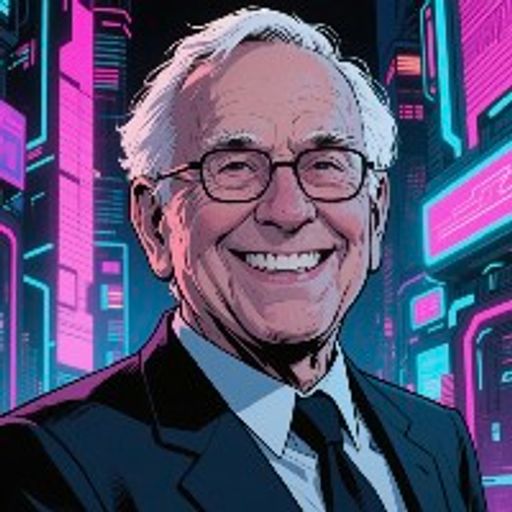
Will yield-bearing stablecoins force banks into the crypto industry? David Sacks offers new insights
Summary
David Sacks, a White House advisor on cryptocurrency policy, said the divide between traditional banking and digital assets is expected to end as regulatory frameworks take shape, according to a recent interview.
Sacks stated that cryptocurrencies, stablecoins, and banks will ultimately merge into a single digital asset industry. He said that once comprehensive crypto market structure legislation is passed, banks will enter the crypto space at scale, erasing the boundary between traditional finance and blockchain-based systems.
A central debate in current U.S. crypto legislation concerns whether stablecoin issuers should be permitted to pay yield to holders. Sacks explained that opposition from banks centers on this issue, though he noted that some form of yield is already embedded in the GENIUS Act, meaning the mechanism will likely exist regardless of resistance.
According to Sacks, if banks fail to reach a compromise, they risk losing ground as yield-bearing stablecoins emerge under existing laws. He stated that a comprehensive market structure law is more important than any single provision.
Sacks said banks will initially resist yield-bearing stablecoins, but that position will change once they become active participants in the stablecoin business themselves. Over time, banks are expected to view yield as a competitive advantage within a unified digital asset framework, he said. Once regulatory clarity is established, stablecoins could become a core product for both crypto-native firms and traditional financial institutions, according to Sacks.
Sacks also addressed U.S.-China competition in artificial intelligence and semiconductor technology. He noted that China is increasingly focused on self-sufficiency, particularly through domestic companies like Huawei. China is building its own technology ecosystem rather than relying on U.S. chipmakers, he said.
The U.S. strategy has been to allow China access to older-generation chips in order to slow Huawei’s expansion by capturing market share, according to Sacks. However, he acknowledged that this approach may become less effective as China continues moving toward technological independence.
Sacks drew a contrast between regulatory environments under different administrations, arguing that under Donald Trump, the technology sector experienced stronger support and less regulation compared to the Biden administration. In his view, reduced regulatory pressure allowed innovation to move faster across both crypto and AI sectors.
Sacks also commented on the recurring idea of the United States acquiring Greenland. He stated that U.S. interest in Greenland dates back approximately 150 years, and that Trump brought the topic back into public discussion rather than introducing a new geopolitical concept.
The comments suggest that U.S. crypto policy is moving toward integration rather than isolation of digital assets from traditional finance, according to the interview. Stablecoins, banks, and blockchain infrastructure are increasingly being treated as components of the same financial system.
If regulatory clarity is achieved and institutional participation expands, crypto adoption could accelerate, Sacks indicated. The advisor’s statements point to a shift in which crypto may be viewed not as an alternative system but as a foundational layer of modern finance.