


FTT meaning

What Is the FTX Token (FTT)?
The FTX Token (FTT) is a platform token originally designed to power the FTX exchange ecosystem, serving as an incentive and utility asset. Launched on Ethereum as an ERC-20 token, FTT’s key functions include trading fee discounts, collateral for contract margin, staking for rebates and voting rights, and a buyback-and-burn mechanism that manages circulating supply.
ERC-20 is the universal token standard on Ethereum, defining guidelines for token transfers, balance queries, and compatibility with wallets and dApps. The buyback and burn process refers to the platform using revenues to repurchase tokens and permanently destroy them, reducing overall supply. Margin collateral means using FTT as an asset backing contract positions. Staking involves locking up tokens to earn platform rewards or privileges.
FTX Token (FTT): Current Price, Market Cap, and Circulation
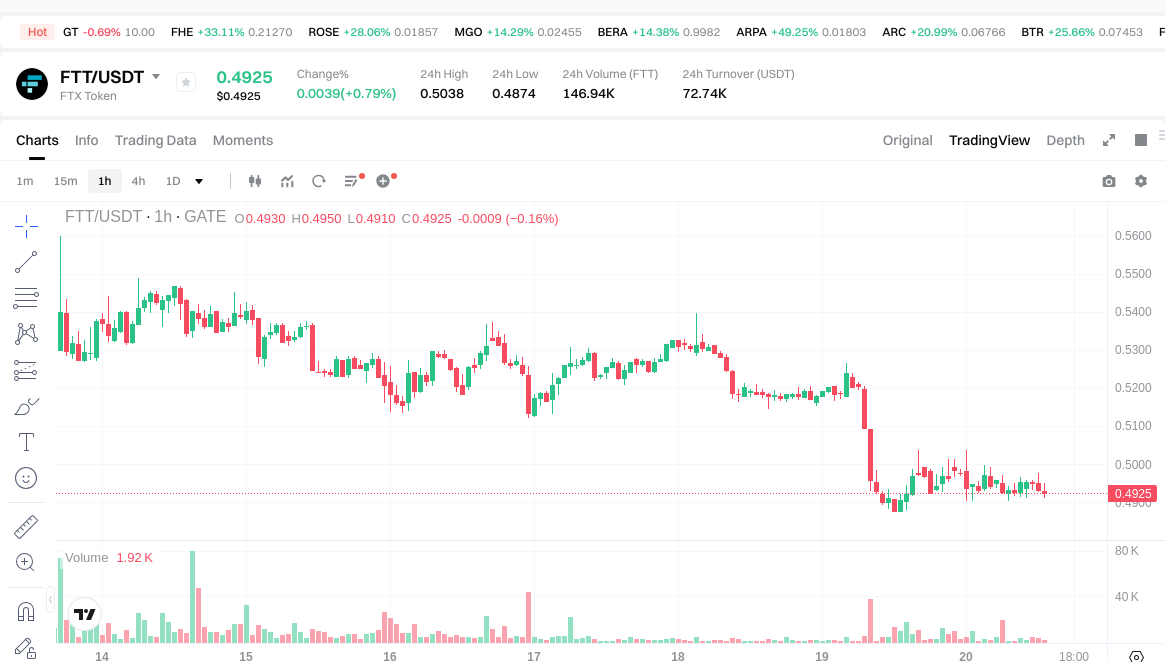
As of 2026-01-20, the price of FTT is approximately $0.494900. The circulating, total, and maximum supply all stand at 328,895,103.813207 tokens. The market capitalization is about $162,770,186.877156, with a fully diluted market cap also at $162,770,186.877156. The token’s market share is roughly 0.004900%.
View FTT USDT Price
Daily trading volume is around $72,004.493541. Price changes: -0.40% in 1 hour, +1.06% in 24 hours, -6.069% in 7 days, and -2.10% in 30 days.
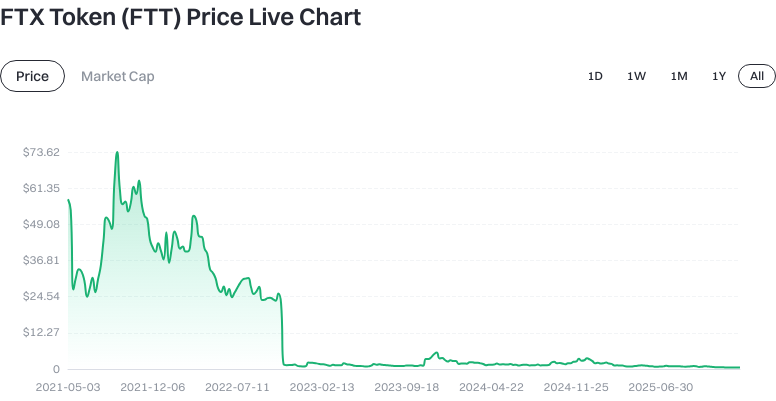
Source: Provided market data (as of 2026-01-20).
Market capitalization equals price multiplied by circulating supply and reflects relative scale. Fully diluted market cap matches circulating cap if total supply is stable. Market share indicates the token’s proportion within the broader crypto market. Trading volume shows activity level; price change percentages represent movements over selected periods.
Who Created FTX Token (FTT) and When?
FTT was launched by the FTX team on July 28, 2019 as the platform’s sole utility token. Its incentives were designed around trading fee discounts, margin collateralization, buyback and burn mechanisms, and staking rewards to foster network effects and increase demand.
According to public reports up to 2024, FTX has faced major operational and legal events that have affected both its ecosystem and actual token use cases. Investors should rely on current official announcements and regulatory disclosures rather than historical assumptions.
How Does the FTX Token (FTT) Work?
FTT operates on the Ethereum blockchain under the ERC-20 standard, with all issuance and transfers managed via smart contracts. The platform previously allocated part of fee revenue to buy back FTT and burn it on a set schedule to decrease supply. Token holders benefited from trading fee discounts; in derivatives trading, FTT could serve as margin collateral to optimize capital efficiency; staking offered enhanced rebates, voting rights, and airdrop bonuses.
It’s important to note that these platform-dependent benefits require reliable platform operations and execution. While smart contracts reduce manual risk, platform-level economic arrangements and governance still affect token utility.
What Can You Do With the FTX Token (FTT)?
During active platform operations, FTT was used for trading fee discounts, margin collateralization, OTC (over-the-counter) trading rebates, and participation in buyback-and-burn programs; staking improved referral rebates, provided maker fee rewards and voting rights, along with airdrop bonuses.
Currently, practical uses depend on whether the platform and related products remain operational and their rules are enforced. Many holders treat FTT primarily as a secondary market trading asset. Usability and liquidity depend on support from exchanges and wallets.
Which Wallets and Extensions Support FTX Token (FTT)?
As an ERC-20 token, FTT can be managed with common Ethereum wallets such as browser extensions or hardware wallets. Custodial storage means assets are held in exchange accounts; non-custodial storage involves users controlling private keys or seed phrases, with assets directly attributed to users on-chain.
Before transferring or withdrawing tokens, verify the official contract address (using reputable blockchain explorers) to avoid counterfeit tokens. Ethereum transactions require Gas Fees, which fluctuate based on network congestion. Long-term holders should consider hardware wallets and multisig solutions for added security.
Key Risks and Regulatory Considerations for FTX Token (FTT)
- Platform & Governance Risk: Platform incidents directly impact token utility and value realization.
- Liquidity Risk: Low trading volume may lead to significant slippage—where executed prices differ from expectations.
- Compliance Risk: Regulatory stances toward platform tokens and related activities vary by region, potentially affecting trading and holding.
- Smart Contract & Technical Risk: Vulnerabilities in contracts, cross-chain bridge risks, phishing attacks, and fake contract addresses.
- Custody Risk: Holding assets in exchange accounts exposes users to platform operational and security risks; non-custodial users must safeguard private keys—private key leaks mean loss of asset control.
How Do I Buy and Safely Store FTX Token (FTT) on Gate?
Step 1: Register a Gate account and complete KYC verification. KYC (“Know Your Customer”) ensures compliance and security.
Step 2: Fund your account. Deposit fiat currency or transfer USDT or other stablecoins for subsequent orders.
Step 3: Check if FTT is listed. Search “FTT” on Gate spot trading to find supported pairs/networks. If unavailable, watch for listing updates before proceeding.
Step 4: Place your trade. Market orders execute immediately at current prices; limit orders wait for ideal price execution. Use limit orders and split trades to reduce slippage. Set appropriate price/quantity; track status in “Orders & Trades.”
Step 5: Withdraw & self-custody. For personal storage, select Ethereum network for withdrawal on Gate; enter your wallet address and contract info. Safeguard your private key or seed phrase—test with small transfers before larger withdrawals.
Step 6: Security & risk management. Enable two-factor authentication and anti-phishing codes; store significant assets in hardware wallets or use layered custody; regularly verify addresses and back up seed phrases; beware of phishing links or fake customer service.
How Is FTX Token (FTT) Different From Ethereum (ETH)?
FTT is a platform utility token whose value is tied to exchange-specific use cases; ETH is the native asset of the Ethereum blockchain—used for Gas payments and smart contract execution.
FTT’s supply and mechanisms rely on platform decisions (buyback/burn, fee discounts, staking rewards); ETH’s monetary policy and consensus are governed by decentralized protocol rules. FTT’s main applications are within the exchange ecosystem; ETH serves as foundational settlement for DeFi and NFT activities. Risk profiles differ: FTT is more exposed to platform operation/regulatory issues; ETH faces risks tied to technical upgrades and on-chain ecosystem cycles.
Summary of FTX Token (FTT)
FTX Token (FTT) is an Ethereum-based platform token that historically balanced demand/supply via fee discounts, margin collateralization, staking benefits, and buyback/burn programs. As of 2026-01-20, its scale and activity are limited—users should pay close attention to liquidity and platform-specific risks when trading or holding FTT. On Gate, confirm listing/network support before trading; manage slippage with split orders/risk controls; long-term holders should prioritize self-custody with hardware wallets for private key security. The future of FTT’s utility depends on project governance and regulatory developments—monitor official updates and policy changes before allocating funds.
FAQ
What Is the Relationship Between FTT and FTX?
FTT is the platform token issued by the FTX exchange—a crypto derivatives trading platform where FTT functioned as its native token granting holders fee discounts and governance participation. Note: FTX filed for bankruptcy in November 2022 but FTT remains tradable on secondary markets.
What Are the Practical Uses of Holding FTT?
FTT’s main utilities are threefold: fee discounts—greater holdings unlock higher reductions; governance—participation in certain platform decisions/new product launches; investment/trading—listed on exchanges for trade/investment purposes. Since FTX’s bankruptcy, practical utility has declined with most value now as a tradable asset.
What Is the Total Supply of FTT?
The total supply of FTT is 335 million tokens. Some tokens have been burned through the deflationary mechanism where FTX periodically used revenues to buy back/burn FTT—originally meant to enhance value but discontinued after bankruptcy.
Where Can I Trade FTT?
FTT is listed on major exchanges including Gate, Binance, Huobi, among others. You can trade it directly on Gate via spot trading, futures contracts, etc. When choosing an exchange, prioritize security credentials and liquidity depth.
Why Is FTT’s Price So Volatile?
FTT’s price volatility stems from three main factors: changes in FTX’s business status—increased revenue drove higher token demand; overall crypto market trends; shifting regulatory expectations/policies. The 2022 bankruptcy event had a dramatic impact—driving prices sharply down from historical highs.
FTT (FTT) Quick Reference Glossary
- Exchange Token: A token issued by a cryptocurrency exchange that incentivizes users and provides ecosystem privileges.
- Fee Discount: Users holding exchange tokens enjoy reduced fees for trading or withdrawals.
- Governance Rights: Token holders can vote on exchange operations or ecosystem development directions.
- Liquidity Mining: Users earn token rewards by providing liquidity to trading pairs.
- Burn Mechanism: Exchanges periodically destroy portions of tokens—reducing circulating supply to maintain value.
FTT (FTT): References & Further Reading
-
Official Website / Whitepaper:
-
Developer Docs:
-
Authoritative Media / Research:
Related Articles

In-depth Explanation of Yala: Building a Modular DeFi Yield Aggregator with $YU Stablecoin as a Medium

What is ORDI in 2025? All You Need to Know About ORDI
