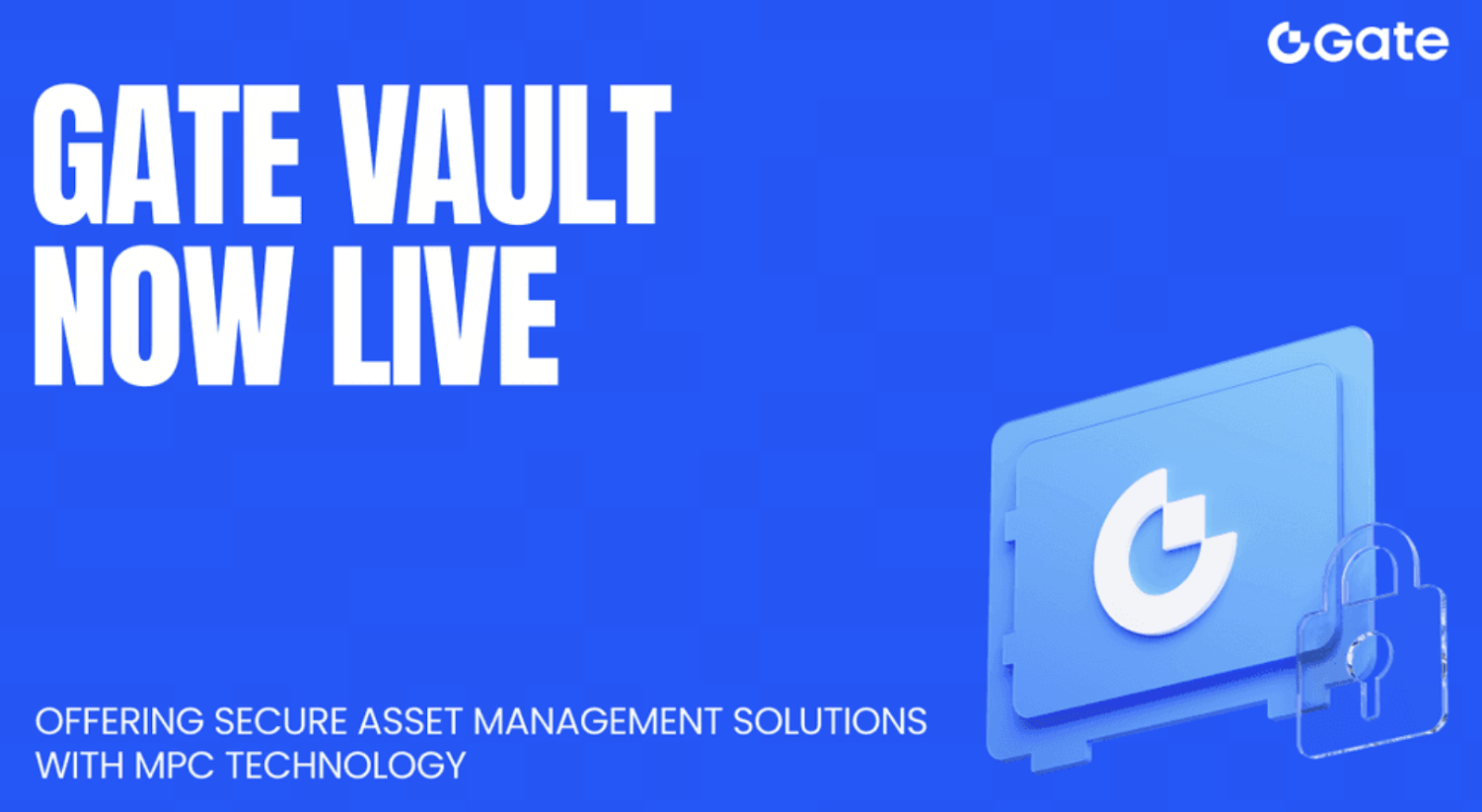
Redefining Web3 Asset Security: How Gate Vault Reduces Irreversible Risk
The Real Barrier to Web3 Is Its Zero-Margin for Error
For many users, the true obstacle to Web3 isn’t technical complexity or a lack of use cases. Instead, it’s the intense risk environment—where a single operational error can lead to irreversible consequences.
Lost private keys, accidental authorizations, and phishing links offer almost no second chances in the blockchain world. This zero-tolerance design turns asset security into a psychological hurdle, not just a technical one. Gate Vault was created to address this structural challenge: moving security mechanisms beyond the unrealistic expectation that users will never make mistakes.
From Single Point of Failure to Distributed Control
The main vulnerability of traditional wallets is that all permissions rest with a single private key. If that key fails for any reason, asset control can be lost forever.
Gate Vault employs MPC (Multi-Party Computation) architecture, splitting the private key into three independent shards. These are held separately by the user, the Gate platform, and a third-party security institution. This approach shifts asset protection from a single point of failure to a collaborative model. Even if one party encounters an issue, overall control remains intact.
2-of-3 Signing: Sovereignty as System, Not Slogan
With Gate Vault, every asset operation requires signatures from at least two of the three parties. This mechanism fundamentally changes the power structure of asset control:
- Users no longer have to fully trust a single platform
- The platform cannot move user assets independently
- The third-party security institution cannot act beyond its authority
Asset sovereignty isn’t just a concept—it’s enforced as a mandatory condition in every transaction, ensuring no single party can unilaterally control fund flows.
Giving Risk a Window for Intervention
Most security breaches cause major losses not because the attack is complex, but because it happens too fast. Once an error is completed on-chain, it cannot be undone.
Gate Vault introduces a 48-hour security buffer. If the system detects abnormal activity, the transaction is not executed irreversibly. During this window, users can proactively revoke authorization, freeze assets, or halt the transaction. This shifts protection from post-incident response to real-time intervention, effectively reducing the impact of a single mistake.
Asset Recovery in Extreme Scenarios
In cases of lost devices or system failures, Gate Vault maintains a comprehensive disaster recovery mechanism. Users can follow official procedures and use third-party tools to recombine key shards and restore full control over their assets.
This design is ideal for long-term holders and high-net-worth users, ensuring asset sovereignty isn’t permanently interrupted by a single event and reducing the structural risks of holding Web3 assets over time.
A Unified Security Standard Across the Gate Web3 Ecosystem
Gate Vault is not a standalone tool—it is the core security layer of the Gate Web3 ecosystem. Whether it’s Gate Layer, Gate Perp DEX, Gate Fun, Meme Go, or Gate PWM, all products operate under the same security logic. This consistency allows users to manage assets across different platforms without having to adapt to varying risk control rules, making asset management and operations more stable and seamless.
Usage Conditions and Fees
- Transferring assets from Gate Vault back to a Gate account incurs a 0.1% maintenance fee (capped at $100).
- VIP 3 and above users can use Gate Vault for free.
- General user access will roll out in later phases.
- Gate App must be updated to version V7.23.6 or above.
It’s recommended to complete protection setup in advance, before market volatility intensifies or security incidents become frequent.
Gate Vault User Guide: https://www.gate.com/help/guide/functional_guidelines/47328/gate-vault-user-guide
Conclusion
Gate Vault doesn’t just reinforce a single aspect of security—it redefines risk management at the structural level. Through distributed architecture, multi-party signing, security buffers, and disaster recovery, it transforms Web3’s once-irreversible risk into a system that can intercept, correct, and operate sustainably. For users seeking both asset sovereignty and peace of mind in the Web3 world, Gate Vault offers a more mature and pragmatic path to asset security—not a more complicated protection process.
Share
Content
The Real Barrier to Web3 Is Its Zero-Margin for Error
From Single Point of Failure to Distributed Control
2-of-3 Signing: Sovereignty as System, Not Slogan
Giving Risk a Window for Intervention
Asset Recovery in Extreme Scenarios
A Unified Security Standard Across the Gate Web3 Ecosystem
Usage Conditions and Fees
Conclusion


Related Articles

Crypto Future Profit Calculator: How to Calculate Your Potential Gains

Crypto Futures Calculator: Easily Estimate Your Profits & Risks

What is Oasis Network (ROSE)?
The $50M Crypto Scam Nobody Is Talking About

What Are Crypto Options?