Is the $SKR Airdrop Being “Halved”? Can the Solana Mobile Phone Break Through the Growth Limits of the Airdrop Era?
$SKR Airdrop Sale Scale “Halved”? Current Status and Market Reaction
In January 2026, Solana Mobile officially launched its native token $SKR airdrop for the next-generation Web3 smartphone, Seeker. According to official sources and multiple reports, roughly 200 million to 300 million SKR tokens were allocated to Seeker users and dApp developers, available for claim and staking through the built-in wallet.
While the airdrop is substantial, skepticism has grown compared to the initial wave of ecosystem tokens and early large-scale airdrop projects. Concerns about “airdrop-driven excessive growth” have increased, especially as short-term traders took profits after the initial price surge, amplifying market volatility. This has led observers to question whether the airdrop is merely a “sugar-coated bullet” that drives short-term attention rather than providing lasting support.
Solana Mobile Smartphones: Hardware Sales and the Impact of Airdrop Incentives
Since the Saga era, Solana Mobile has leveraged systematic incentives to drive smartphone pre-sales and community engagement—a strategy continued by the Seeker model. According to previously released official pre-order figures, the product surpassed several hundred thousand units sold since pre-sales began in 2025, reflecting strong market enthusiasm for the hardware.
However, these sales remain closely tied to airdrop incentives: users are buying the device not only for its features but also to qualify for subsequent $SKR airdrop allocations. This raises a key market concern: when the airdrop incentive weakens or ends, can Solana Mobile’s product appeal and ecosystem stickiness sustain hardware sales?
$SKR Price Performance and Short-Term Volatility Analysis
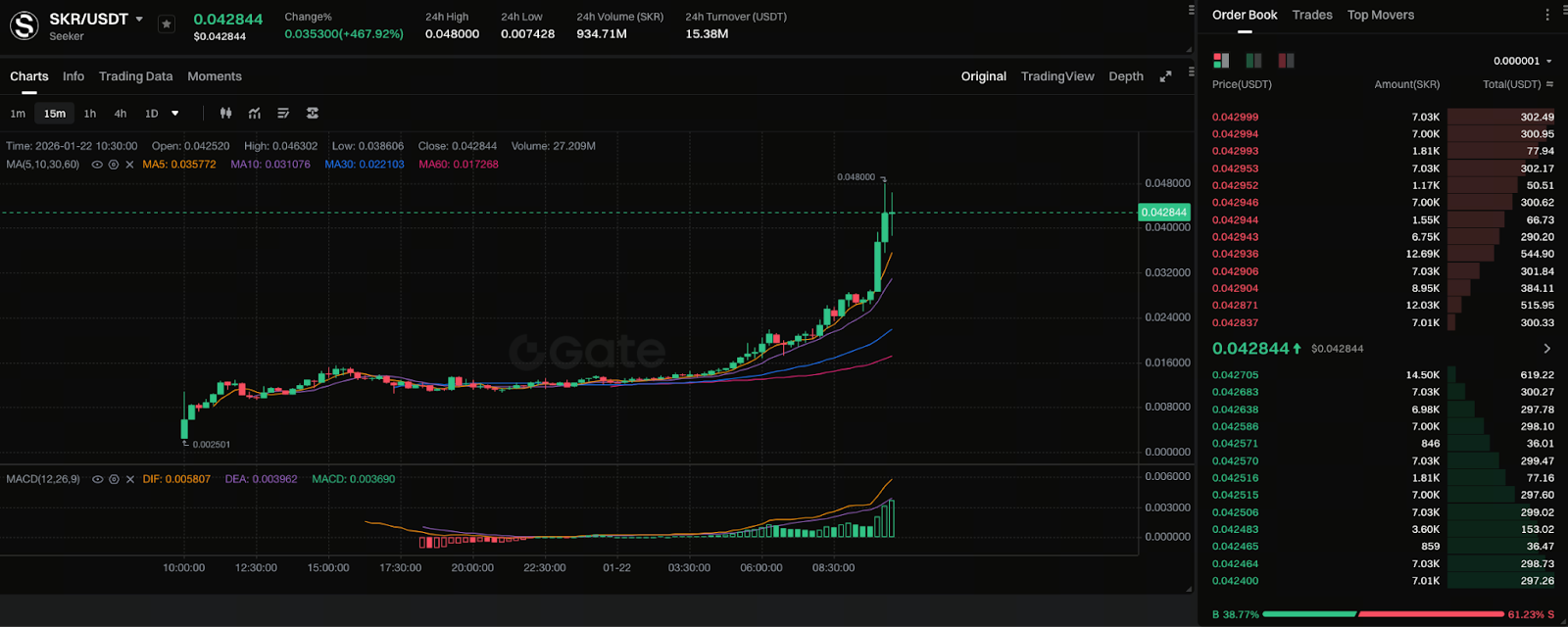
Chart: https://www.gate.com/trade/SKR_USDT
At the start of the airdrop, $SKR tokens posted a sharp rally after listing on exchanges. Real-time market data shows SKR’s price once surged by more than 30%–60%. It then corrected as airdrop claims and trading pressure increased, but selling did not prevent further gains. As of January 22, 2026, SKR traded at about $0.042, nearly four times higher than the previous day.
Such volatility is common in the crypto market, especially for tokens tied to airdrops, which often see strong speculative swings after the Token Generation Event (TGE). For long-term investors, however, the real focus is on the token’s economic model and ecosystem incentives. Solana Mobile has established governance, rewards, and staking mechanisms for $SKR, aiming to deliver sustainable long-term value.
Ecosystem Development: From Airdrop Incentives to Long-Term Value
For the Solana Mobile ecosystem, airdrop incentives alone cannot build a resilient platform. True growth relies on:
- Developer Ecosystem Expansion: dApp developers are the backbone of sustained platform vitality. By allocating a portion of the airdrop to developers and introducing governance mechanisms, Solana Mobile aims to motivate the creation of products that address user needs.
- Authentic User Engagement: While the airdrop has brought users into the ecosystem, long-term growth depends on actual usage of decentralized apps within the Seeker smartphone.
- Cross-Chain and Collaborative Ecosystem: Expanding the Solana network and partnering with other Layer 1/Layer 2 projects will enhance $SKR’s utility and value proposition.
Can It Move Beyond “Airdrop as the Peak”? Future Outlook
Solana Mobile now faces the challenge of turning short-term airdrop-driven momentum into genuine, sustained demand. Current trends show SKR price and phone sales remain somewhat correlated, but signs of weakening are emerging. This means:
- If ecosystem application growth remains slow, market attention may wane once airdrop profits are realized.
- If developer ecosystem expansion and user engagement deepen, $SKR could become a true bridge between hardware and decentralized services.
Whether Solana Mobile can break free from the “airdrop as its peak” narrative will depend on its ability to deliver high-frequency usage scenarios and foster a healthy developer ecosystem during 2026–2027.
Share
Content
$SKR Airdrop Sale Scale “Halved”? Current Status and Market Reaction
Solana Mobile Smartphones: Hardware Sales and the Impact of Airdrop Incentives
$SKR Price Performance and Short-Term Volatility Analysis
Ecosystem Development: From Airdrop Incentives to Long-Term Value
Can It Move Beyond “Airdrop as the Peak”? Future Outlook


Related Articles

Crypto Future Profit Calculator: How to Calculate Your Potential Gains

Crypto Futures Calculator: Easily Estimate Your Profits & Risks

What is Oasis Network (ROSE)?

The $50M Crypto Scam Nobody Is Talking About

What Are Crypto Options?