


Having just spent 250 million to acquire the company, and then laying off 30% of its staff, Polygon has adopted a new approach to survival.
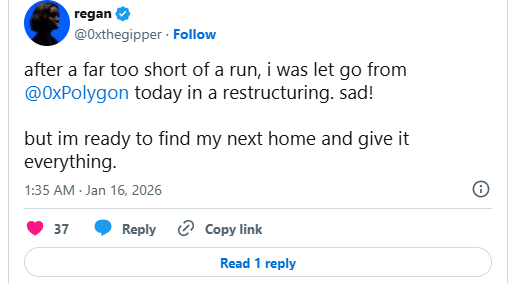
Today I saw a news report: Polygon has laid off about 30% of its workforce.
Although Polygon has not issued an official statement, CEO Marc Boiron confirmed the layoffs in an interview, noting that the overall headcount will remain steady as newly acquired teams join the organization.
Former employees have also posted about the layoffs on social media, further corroborating the news.
Yet, in the same week, Polygon announced a $250 million acquisition of two companies. It seems unusual to lay off staff while making such significant purchases.
If this were merely downsizing, they wouldn’t be spending $250 million on acquisitions. If it were expansion, cutting 30% of jobs wouldn’t make sense. Taken together, these moves suggest a strategic overhaul.
The layoffs targeted employees from existing business lines, making room for the incoming teams from the acquisitions.
$250 Million for Licenses and Payment Channels
The two acquired companies are Coinme and Sequence.
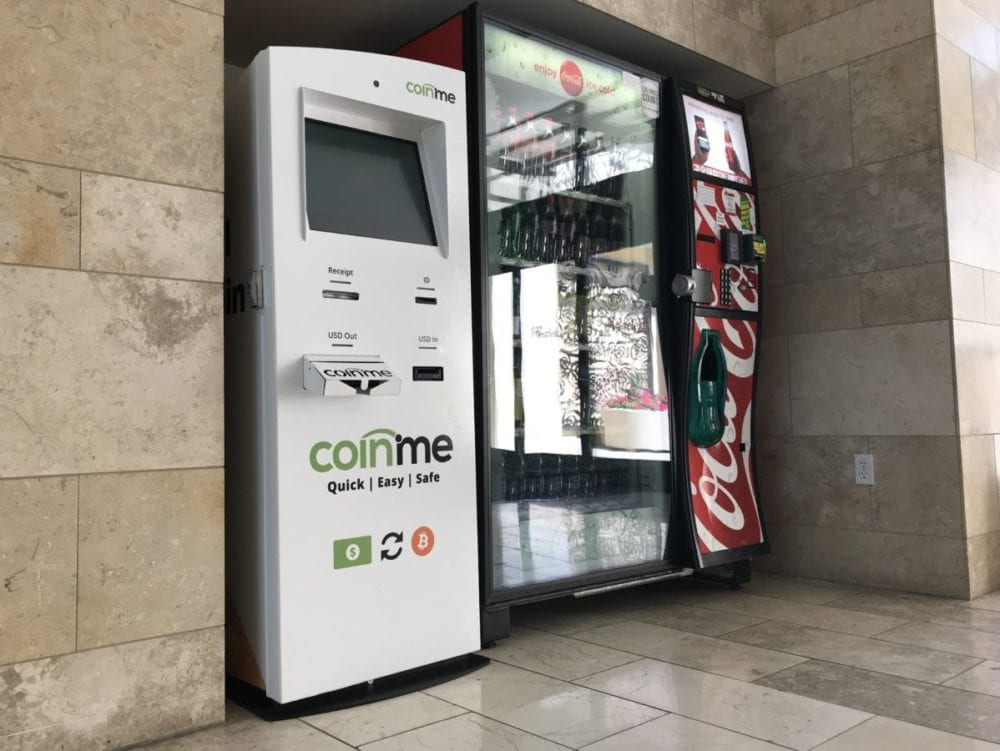
Coinme, established in 2014, operates fiat-to-crypto exchange channels and runs crypto ATMs at over 50,000 retail locations across the US. Its most valuable asset is its regulatory footprint—it holds money transmitter licenses in 48 states. These licenses are extremely difficult to obtain in the US; even giants like PayPal and Stripe spent years collecting them.
Sequence builds wallet infrastructure and cross-chain routing solutions. In essence, it lets users transfer assets across blockchains with a single click, eliminating the need to manage bridges or gas swaps. Its clients include Polygon, Immutable, and Arbitrum, and it has a distribution partnership with Google Cloud.
The combined acquisitions total $250 million. Polygon calls this suite the “Open Money Stack,” positioning it as middleware for stablecoin payments aimed at banks, payment companies, and remittance providers.
Here’s the logic as I see it:
Coinme delivers compliant fiat on- and off-ramps, Sequence offers intuitive wallets and cross-chain capabilities, and Polygon provides the settlement layer. Together, they form a full-stack stablecoin payment infrastructure.
The key question: Why is Polygon moving in this direction?
Polygon’s Path as an L2 Is Becoming Increasingly Challenging
By 2025, the landscape is clear: Base has taken the lead.
Coinbase’s L2 has grown its TVL from $3.1 billion at the start of last year to $5.6 billion, capturing half of the entire L2 market. Arbitrum has held onto 30% but has seen little growth. Most other L2s lost user activity after their airdrops ended.
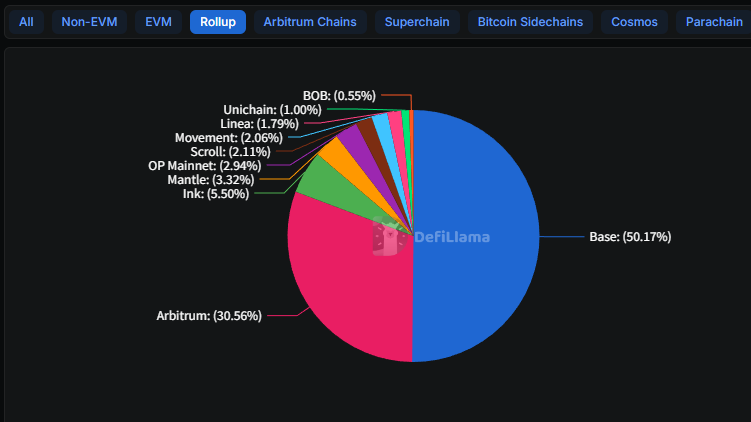
Base’s edge comes from Coinbase’s massive user base—over 100 million registered users—so any new feature automatically gains traction.
Take Morpho, a lending protocol: its deposits on Base have soared from $354 million at the start of last year to $2 billion, primarily because it was integrated into the Coinbase app. Users can access it directly, with no need to understand L2s or Morpho itself.
Polygon lacks this kind of gateway. In 2024, it also laid off 20% of its staff, a move aligned with broader bear market cutbacks across the industry.
This time, however, the company is still financially healthy but is proactively changing direction.
Polygon’s earlier narrative centered on enterprise adoption—partnerships with Disney on accelerators, Starbucks’ NFT membership program, Meta’s Instagram minting, and Reddit avatars, among others.
Four years later, most of those partnerships have faded. Starbucks’ Odyssey program, for example, was shut down last year.
Trying to compete head-on with Base in the L2 arena leaves Polygon with slim chances of success. Technical gaps can be bridged, but user acquisition channels are harder to replicate. Rather than fight a losing battle, it makes sense to seek new opportunities.
Stablecoin Payments: A Promising but Crowded Arena
Stablecoin payments are indeed a rapidly growing market.
By 2025, the total stablecoin market cap surpassed $300 billion, up 45% year-over-year. Use cases have expanded from exchange arbitrage to cross-border payments, business finance, payroll, and more.
But competition is fierce.
Last year, Stripe spent $1.1 billion to acquire stablecoin infrastructure company Bridge, and recently secured the right to issue the USDH stablecoin on Hyperliquid. PayPal’s PYUSD already accounts for 7% of stablecoin volume on Solana.
Circle is developing its own Payments Network. Major banks like JPMorgan, Wells Fargo, and Bank of America are forming alliances to launch their own stablecoins.
Polygon co-founder Sandeep Nailwal told Fortune that these acquisitions put Polygon in direct competition with Stripe.
Frankly, that’s a bold claim.
Stripe’s acquisition cost $1.1 billion; Polygon’s was $250 million. Stripe has millions of merchant clients, while Polygon mainly serves developers. Most importantly, Stripe has spent over a decade building payment licenses and banking relationships.
Head-to-head, these companies are not in the same league.
But Polygon may be betting on a different strategy. Stripe aims to integrate stablecoins into its closed ecosystem, letting merchants continue using Stripe with a faster, cheaper stablecoin settlement layer.
Polygon wants to offer open infrastructure, enabling any bank or payment provider to build their own services on top.
One approach is vertical integration; the other is a horizontal platform. These models may not compete directly, but they are vying for the same client base.
A New Playbook, Uncertain Prospects
Ultimately, layoffs have become commonplace in crypto over the past two years.
OpenSea cut 50% of its staff; Yuga Labs and Chainalysis have also downsized. ConsenSys laid off 20% last year and is cutting further this year. Most of these were forced by dwindling cash reserves—the priority was survival.
Polygon is different. It still has cash, can spend $250 million on acquisitions, yet chose to cut 30% of its workforce.
This is a strategic overhaul, but it comes with risks.
Coinme, the company Polygon acquired, is primarily in the crypto ATM business, operating more than 50,000 machines across the US that let users buy crypto with cash or cash out crypto for fiat.
The problem: this business ran into trouble last year.
California regulators fined Coinme $300,000 for allowing users to exceed the $1,000 daily withdrawal limit at its ATMs. Washington State went further, issuing a ban that was only lifted in December.
Polygon’s CEO previously claimed Coinme’s compliance was “above requirements.” But regulatory actions are on record—positive statements can’t change that.
These developments also change the narrative for the $POL token.
Previously, the more the chain was used, the more valuable POL became. After the acquisition, Coinme generates real revenue from transaction fees—actual cash, not just token speculation. The company says it expects to generate over $100 million in annual revenue.
If that materializes, Polygon could evolve from a “protocol” to a “company,” with revenue, profit, and a tangible valuation anchor—something rare in crypto.
However, traditional finance is moving in fast, and the window for crypto-native firms is closing.
The industry has a saying: build during the bear market, harvest during the bull market.
Polygon’s challenge now is that while it’s still building, the next bull market’s winners may no longer be crypto-native players like itself.
Disclaimer:
- This article is reproduced from [TechFlow] with copyright belonging to the original author [David]. If you have concerns about this reprint, please contact the Gate Learn team, and we will handle it promptly in accordance with relevant procedures.
- Disclaimer: The views and opinions expressed in this article are solely those of the author and do not constitute investment advice.
- Other language versions of this article are translated by the Gate Learn team. Unless Gate is specifically mentioned, do not copy, distribute, or plagiarize the translated article.
Share
Content


Related Articles

The Future of Cross-Chain Bridges: Full-Chain Interoperability Becomes Inevitable, Liquidity Bridges Will Decline

Solana Need L2s And Appchains?

Sui: How are users leveraging its speed, security, & scalability?

Navigating the Zero Knowledge Landscape

What is Tronscan and How Can You Use it in 2025?
