


Crypto Collateral 101: In-Depth Overview of Concepts, How It Works, and Associated Risks
What Is Cryptocurrency Collateral?
Collateral is an asset that a borrower pledges to secure a loan or credit. If the borrower defaults, the lender may seize the collateral.
Within the Web3 ecosystem, cryptocurrency collateral refers to using digital assets like Bitcoin or Ethereum as loan guarantees to borrow stablecoins or fiat currency. Lenders assess the collateral’s value based on the loan-to-value (LTV) ratio. Because cryptocurrency prices are highly volatile, platforms typically require users to over-collateralize. For example, if a platform sets the collateralization ratio at 150%, the collateral must be worth at least 1.5 times the loan or minted asset value. This excess collateral acts as a safeguard, ensuring enough value remains to repay the loan if the collateral’s price declines.
Where Can You Borrow Against Crypto Collateral?
Today, many centralized off-chain financial companies—including exchanges like Binance, Coinbase, and Gate—as well as DeFi protocols such as SKY (formerly Maker DAO), Aave, and Kamino, allow users to use cryptocurrencies as collateral to borrow assets.
To borrow, users simply transfer assets to the designated custodial wallet or smart contract. Loans are issued instantly without credit checks, and users retain the upside potential of their collateral.
Compared to centralized finance, DeFi crypto collateralization offers 24/7 operation, a broad selection of borrowable and collateral assets, and full transparency—anyone can audit the system. This openness drives the significant growth potential of decentralized finance.
According to official statistics, the decentralized lending protocol Aave has issued nearly $1 trillion in cumulative loans from January 2020 to January 2026.

Image source: X
In-Depth Analysis: How Crypto Collateral Loans Work
Borrowers deposit excess-value collateral—such as BTC, ETH, or other cryptocurrencies—according to platform requirements to obtain USDT, USDC, or similar funds. Because collateral prices fluctuate, borrowers must closely monitor their collateralization ratio to avoid liquidation triggered by price drops.
DeFi protocols automate collateral management through smart contracts that adjust or liquidate collateral as needed. Once the loan is repaid, borrowers can unlock their collateral. For example, $20,000 in ETH can secure a $10,000 loan at a 50% LTV ratio; after repayment, the borrower retrieves the original ETH collateral.
Gate Crypto Loan Service: Advantages of Multi-Asset Collateral
Gate’s crypto loan service enables users to use crypto assets as collateral to borrow other tokens—without selling their existing holdings. As of September 2025, Gate’s crypto loan service supports more than 800 borrowable tokens. Borrowed funds can be used for spot, futures, or leveraged trading, invested in Earn or Wealth Management products, staked in mining projects such as ETH 2.0, or even withdrawn directly to external platforms.
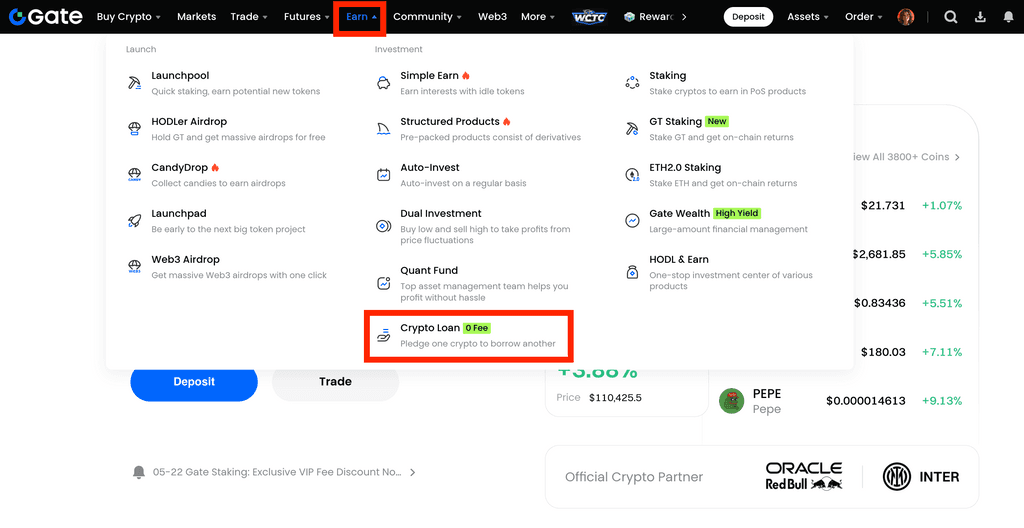
Image source: Gate official website
Currently, Gate’s crypto loan service supports both multi-asset and single-asset collateral models. Compared to the traditional single-asset collateral model, Gate’s multi-asset collateral offers these advantages:
- High capital utilization: Users can pledge all idle tokens in a single position, and the platform supports additional borrowing within the same position. This maximizes margin utilization and improves capital efficiency.
- Low position management costs: Users can collateralize and borrow multiple tokens within the same position, reducing the number of positions to manage.
- User-friendly liquidation mechanism: The platform uses a tiered liquidation mechanism similar to margin trading, offering maximum protection against forced liquidation.
Risks of Cryptocurrency Collateralization
Crypto lending—whether on centralized or decentralized platforms—shares many risks common to other blockchain applications.
Centralized service providers face single-point-of-failure risks. They may be hacked or go bankrupt, making it impossible for users to recover funds. Unlike traditional financial institutions, which typically provide regulatory protection, crypto platforms often lack such safeguards.
Decentralized protocols face risks such as liquidation due to oracle failures and vulnerabilities or hacks in smart contracts. For example, on August 18, 2025, the DeFi lending protocol Exactly Protocol suffered a hack because of a vulnerability in its DebtManager peripheral contract, losing over $7.6 million.
Conclusion
In summary, crypto collateral loans provide traders with efficient access to liquidity, but strict position and risk management are essential to handle liquidation risks from extreme market volatility.
Always follow the principle of “only use money you can afford to lose”: even the most reputable protocols or platforms can encounter serious risks from sophisticated hacks, smart contract vulnerabilities, or team misappropriation of client funds. Never concentrate funds beyond your psychological and financial tolerance in a single protocol or platform.
Further reading:
Share
Content


Related Articles

In-depth Explanation of Yala: Building a Modular DeFi Yield Aggregator with $YU Stablecoin as a Medium

Exploring 8 Major DEX Aggregators: Engines Driving Efficiency and Liquidity in the Crypto Market

What Is Copy Trading And How To Use It?

What Is Technical Analysis?

How to Do Your Own Research (DYOR)?
