YB vs BCH: A Comprehensive Comparison of Two Digital Currency Platforms
Introduction: YB vs BCH Investment Comparison
In the cryptocurrency market, the comparison between YB and BCH remains a topic investors cannot overlook. These two assets exhibit notable differences in market cap ranking, application scenarios, and price performance, representing distinct crypto asset positioning.
YieldBasis (YB): Launched in 2025, this DeFi protocol has gained market attention through its approach to leveraging liquidity and Curve's crvUSD to enhance yields for BTC and ETH holders while addressing impermanent loss concerns.
BitcoinCash (BCH): Since its 2017 launch via hard fork, BCH has been recognized as a peer-to-peer electronic cash system, ranking among the cryptocurrencies with substantial global trading volume and market capitalization.
This article will analyze the investment value comparison between YB and BCH through historical price trends, supply mechanisms, technical ecosystems, and future outlook, attempting to address investors' key question:
"Which represents a more compelling opportunity in the current market environment?"
I. Historical Price Comparison and Current Market Status
YB (Coin A) and BCH (Coin B) Historical Price Movements
- 2017: BCH emerged from a Bitcoin hard fork launched by ViaBTC, with an initial price of $555.89, experiencing significant volatility in its early trading period.
- 2017 (December): BCH reached its all-time high of $3,785.82 on December 20, 2017, driven by the broader cryptocurrency market rally and initial adoption momentum.
- 2018: BCH experienced substantial price decline, falling to its all-time low of $76.93 on December 16, 2018, amid the broader crypto market downturn.
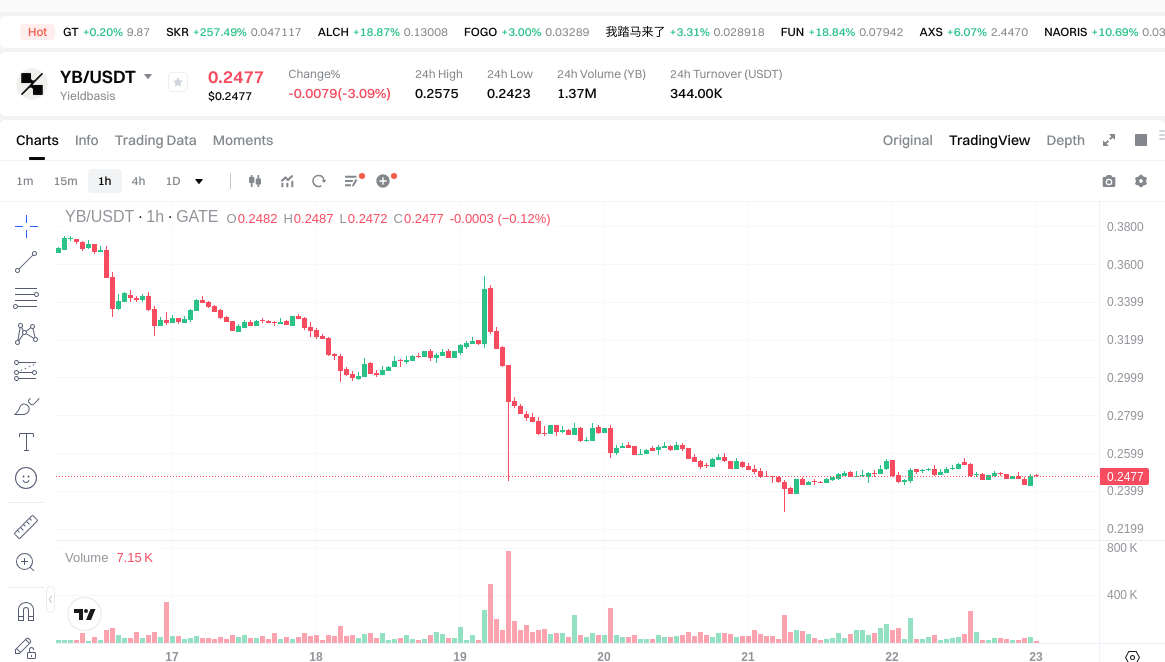
- 2025 (October): YB reached its all-time high of $0.8424 on October 15, 2025, following its recent launch and initial market interest in its DeFi protocol.
- 2026 (January): YB recorded its all-time low of $0.2288 on January 20, 2026, reflecting a sharp decline in a relatively short trading period.
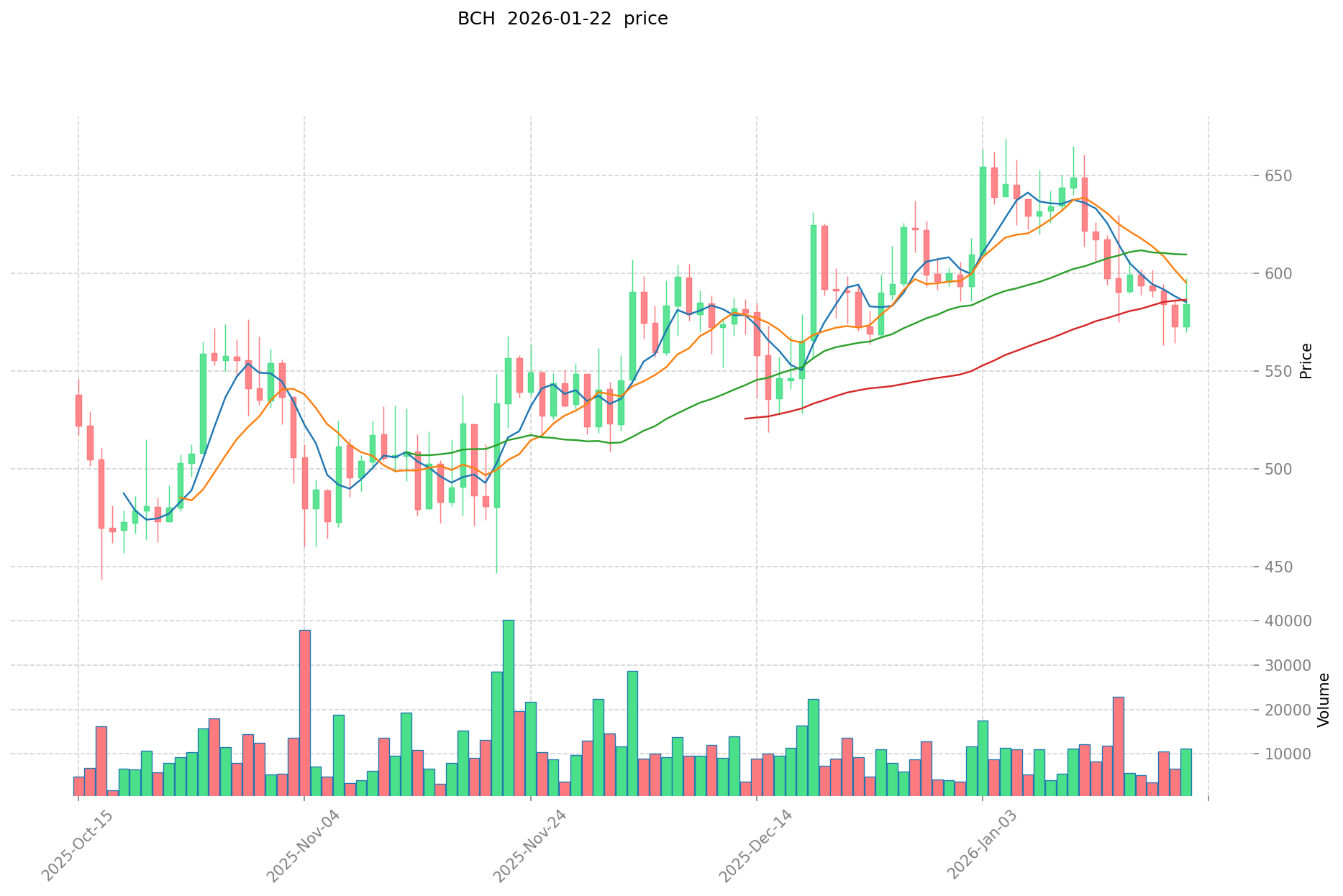
- Comparative Analysis: During the market cycle from late 2025 to early 2026, YB declined from its peak of $0.8424 to its low of $0.2288, representing a decline, while BCH has demonstrated relatively more stable price action with a longer market history, trading at $594.46 after recovering from its 2018 lows.
Current Market Status (2026-01-23)
- YB Current Price: $0.2479
- BCH Current Price: $594.46
- 24-Hour Trading Volume: YB $344,915.97 vs BCH $3,965,336.54
- Market Sentiment Index (Fear & Greed Index): 20 (Extreme Fear)
View real-time prices:
- View YB Current Price Market Price
- View BCH Current Price Market Price
II. Core Factors Affecting YB vs BCH Investment Value
Supply Mechanism Comparison (Tokenomics)
Due to insufficient reference materials, specific supply mechanism details for YB and BCH cannot be provided at this time.
Institutional Adoption and Market Application
Institutional Holdings
Current reference materials do not provide sufficient data regarding institutional preferences between YB and BCH.
Enterprise Adoption
Reference materials lack detailed information on the comparative application of YB and BCH in cross-border payments, settlements, and investment portfolios.
National Policies
Insufficient data is available in the reference materials regarding different countries' regulatory attitudes toward these two assets.
Technical Development and Ecosystem Building
YB Technical Upgrades
Reference materials do not contain information about YB's technical upgrade plans or their potential impacts.
BCH Technical Development
Reference materials lack details on BCH's technical development roadmap and potential implications.
Ecosystem Comparison
Insufficient information is available to compare DeFi, NFT, payment systems, and smart contract implementation between the two projects.
Macroeconomic Conditions and Market Cycles
Performance in Inflationary Environments
Reference materials do not provide comparative data on anti-inflation properties of YB versus BCH.
Macroeconomic Monetary Policy
Insufficient information exists regarding the impact of interest rates and US Dollar Index on both assets.
Geopolitical Factors
Reference materials lack analysis of cross-border transaction demand and international situations affecting these cryptocurrencies.
III. 2026-2031 Price Prediction: YB vs BCH
Short-term Forecast (2026)
- YB: Conservative $0.22257 - $0.2473 | Optimistic $0.2473 - $0.358585
- BCH: Conservative $499.7244 - $594.91 | Optimistic $594.91 - $713.892
Medium-term Forecast (2028-2029)
- YB may enter a moderate growth phase, with projected prices ranging from $0.2262980475 to $0.546886948125 in 2028, potentially reaching $0.41582266228125 to $0.475885935721875 by 2029
- BCH may enter a consolidation and recovery phase, with projected prices ranging from $556.73165075 to $992.726317 in 2028, potentially reaching $515.68107602 to $1081.2667723 by 2029
- Key drivers: institutional capital flows, ETF developments, ecosystem expansion
Long-term Forecast (2030-2031)
- YB: Base scenario $0.295442001550828 - $0.468955558017187 (2030) | Optimistic scenario $0.476646429168669 - $0.788736353029107 (2031)
- BCH: Base scenario $746.074072887 - $956.50522165 (2030) | Optimistic scenario $781.943018698875 - $1251.1088299182 (2031)
Disclaimer
YB:
| Year | Predicted High Price | Predicted Average Price | Predicted Low Price | Price Change |
|---|---|---|---|---|
| 2026 | 0.358585 | 0.2473 | 0.22257 | 0 |
| 2027 | 0.451384325 | 0.3029425 | 0.227206875 | 22 |
| 2028 | 0.546886948125 | 0.3771634125 | 0.2262980475 | 52 |
| 2029 | 0.475885935721875 | 0.4620251803125 | 0.41582266228125 | 86 |
| 2030 | 0.665916892384406 | 0.468955558017187 | 0.295442001550828 | 89 |
| 2031 | 0.788736353029107 | 0.567436225200796 | 0.476646429168669 | 128 |
BCH:
| Year | Predicted High Price | Predicted Average Price | Predicted Low Price | Price Change |
|---|---|---|---|---|
| 2026 | 713.892 | 594.91 | 499.7244 | 0 |
| 2027 | 687.12105 | 654.401 | 399.18461 | 10 |
| 2028 | 992.726317 | 670.761025 | 556.73165075 | 12 |
| 2029 | 1081.2667723 | 831.743671 | 515.68107602 | 39 |
| 2030 | 1128.676161547 | 956.50522165 | 746.074072887 | 60 |
| 2031 | 1251.1088299182 | 1042.5906915985 | 781.943018698875 | 75 |
IV. Investment Strategy Comparison: YB vs BCH
Long-term vs Short-term Investment Strategies
- YB: May be suitable for investors with higher risk tolerance who are interested in emerging DeFi protocols and yield optimization mechanisms. The asset's recent launch in 2025 and substantial price volatility suggest it carries characteristics of early-stage speculative assets.
- BCH: May be suitable for investors seeking exposure to established cryptocurrency assets with longer market histories and proven payment use cases. BCH's position as a peer-to-peer electronic cash system and its recovery from historical lows may appeal to those evaluating medium to long-term positioning.
Risk Management and Asset Allocation
- Conservative Investors: A potential allocation approach might consider BCH 70-80% vs YB 20-30%, given BCH's longer market presence and relatively established infrastructure compared to YB's recent emergence.
- Aggressive Investors: A more growth-oriented allocation might explore YB 40-50% vs BCH 50-60%, acknowledging the higher volatility associated with newer protocol assets while maintaining exposure to established cryptocurrencies.
- Hedging Tools: Consideration of stablecoin positions, options strategies, and cross-asset diversification may help manage portfolio volatility across different market conditions.
V. Potential Risk Comparison
Market Risk
- YB: The asset has experienced substantial price decline from its all-time high of $0.8424 in October 2025 to its all-time low of $0.2288 in January 2026, demonstrating significant short-term volatility. Limited trading history and relatively low 24-hour trading volume of $344,915.97 may contribute to liquidity-related price sensitivity.
- BCH: While BCH has demonstrated recovery from its 2018 low of $76.93 to current levels around $594.46, it remains subject to broader cryptocurrency market cycles and sentiment shifts. The current market sentiment index reading of 20 (Extreme Fear) reflects challenging conditions affecting established cryptocurrencies.
Technical Risk
- YB: As a protocol launched in 2025 leveraging Curve's crvUSD mechanism, potential technical risks may include smart contract vulnerabilities, protocol dependency risks, and challenges in maintaining sustainable yield mechanisms during varying market conditions.
- BCH: Considerations may include network security dynamics, potential challenges in maintaining mining incentives, and ongoing questions regarding scalability implementations as transaction volumes fluctuate.
Regulatory Risk
- Global regulatory developments continue to evolve regarding cryptocurrency classifications, DeFi protocols, and payment-focused digital assets. Different jurisdictions may apply varying regulatory frameworks that could impact both assets differently based on their respective use cases and technical architectures.
VI. Conclusion: Which Is the Better Buy?
📌 Investment Value Summary:
- YB Characteristics: Represents exposure to emerging DeFi yield optimization strategies with focus on BTC and ETH holder solutions. The protocol's recent launch and approach to addressing impermanent loss concerns may interest those exploring newer mechanisms, though substantial price volatility has been observed.
- BCH Characteristics: Offers exposure to an established cryptocurrency with peer-to-peer payment positioning and longer market history since its 2017 hard fork. Recovery from historical lows and maintenance of substantial trading volumes may appeal to investors evaluating payment-focused cryptocurrencies.
✅ Investment Considerations:
- Novice Investors: May benefit from thorough research into both assets' fundamental mechanisms, starting with smaller position sizes, and maintaining awareness of cryptocurrency market volatility characteristics. Understanding personal risk tolerance becomes particularly important given current extreme fear sentiment readings.
- Experienced Investors: Might evaluate portfolio allocation strategies that account for different risk-return profiles, considering YB's early-stage positioning versus BCH's established market presence. Monitoring technical developments, trading volume trends, and broader market cycle indicators may inform position management decisions.
- Institutional Investors: Could assess both assets within broader cryptocurrency allocation frameworks, evaluating factors including liquidity depth, regulatory clarity, custody solutions availability, and alignment with specific investment mandates regarding asset maturity stages.
⚠️ Risk Disclaimer: The cryptocurrency market exhibits substantial volatility characteristics. This analysis does not constitute investment advice. Investors should conduct independent research, assess personal risk tolerance, and consider consulting qualified financial professionals before making investment decisions.
VII. FAQ
Q1: What are the main differences between YB and BCH in terms of their core functions?
YB (YieldBasis) functions as a DeFi protocol focused on yield optimization for BTC and ETH holders, while BCH (BitcoinCash) operates as a peer-to-peer electronic cash system. YB launched in 2025 with mechanisms leveraging Curve's crvUSD to enhance yields and address impermanent loss concerns, targeting users seeking passive income strategies. BCH, created through a 2017 Bitcoin hard fork, prioritizes transaction processing and payment functionality, positioning itself as a medium of exchange rather than a yield-generating instrument.
Q2: How do the price volatility patterns differ between YB and BCH?
YB exhibits significantly higher short-term volatility compared to BCH. Since its 2025 launch, YB experienced a substantial decline from its all-time high of $0.8424 (October 2025) to its all-time low of $0.2288 (January 2026) within just three months. BCH demonstrates relatively more stable price action with a longer market history, having recovered from its 2018 low of $76.93 to current levels around $594.46, reflecting a more mature asset lifecycle despite broader market cycles.
Q3: Which asset requires higher risk tolerance for investment?
YB requires considerably higher risk tolerance than BCH. As an emerging DeFi protocol launched in 2025, YB carries characteristics of early-stage speculative assets with limited trading history and relatively low 24-hour trading volume of $344,915.97. BCH, with its established market presence since 2017 and substantially higher trading volume of $3,965,336.54, represents a more mature cryptocurrency investment, though it still carries typical cryptocurrency market risks.
Q4: What are the projected price ranges for YB and BCH by 2030?
According to available forecasts, YB's base scenario for 2030 projects a range of $0.295 to $0.469, while the optimistic scenario for 2031 suggests potential prices between $0.477 and $0.789. BCH's base scenario for 2030 indicates a range of $746.07 to $956.51, with the optimistic 2031 scenario projecting $781.94 to $1,251.11. These projections reflect different growth trajectories based on each asset's current market position and maturity stage.
Q5: How do trading volumes compare between YB and BCH, and what does this indicate?
BCH's 24-hour trading volume of $3,965,336.54 significantly exceeds YB's $344,915.97, representing approximately 11.5 times greater liquidity. This substantial difference indicates BCH's deeper market penetration, broader exchange availability, and established investor base. Higher trading volumes typically translate to better price discovery mechanisms, tighter bid-ask spreads, and reduced slippage for larger transactions, which may be particularly relevant for institutional investors or those executing substantial position changes.
Q6: What allocation strategies might different investor types consider?
Conservative investors might explore a BCH-weighted allocation of 70-80% versus YB 20-30%, given BCH's longer market presence and relatively established infrastructure. Aggressive investors with higher risk tolerance might consider more balanced positioning, such as YB 40-50% versus BCH 50-60%, acknowledging the higher volatility associated with newer protocol assets while maintaining exposure to established cryptocurrencies. Both approaches should incorporate individual risk assessment, portfolio diversification principles, and appropriate position sizing relative to overall investment capital.
Q7: What technical risks differentiate YB from BCH?
YB faces technical risks associated with smart contract vulnerabilities, protocol dependency on Curve's crvUSD mechanism, and challenges in maintaining sustainable yield generation during varying market conditions. As a DeFi protocol, YB's functionality relies on complex smart contract interactions that may introduce unique security considerations. BCH's technical risks center on network security dynamics, mining incentive sustainability, and scalability implementation challenges as a payment-focused blockchain. These distinct technical risk profiles reflect each asset's different architectural approaches and use case priorities.
Q8: How does the current market sentiment affect investment considerations for both assets?
The current Market Sentiment Index reading of 20 (Extreme Fear) reflects challenging market conditions affecting both cryptocurrency assets. In such environments, newer assets like YB may experience amplified volatility due to limited price history and lower liquidity, while established assets like BCH might demonstrate relatively more resilience based on proven market cycles and established holder bases. Extreme fear conditions historically correlate with heightened price sensitivity to negative news and reduced risk appetite, suggesting particular importance for position sizing discipline and risk management strategies during this period.
Share
Content
Introduction: YB vs BCH Investment Comparison
I. Historical Price Comparison and Current Market Status
II. Core Factors Affecting YB vs BCH Investment Value
III. 2026-2031 Price Prediction: YB vs BCH
IV. Investment Strategy Comparison: YB vs BCH
V. Potential Risk Comparison
VI. Conclusion: Which Is the Better Buy?
VII. FAQ
How to Buy Cryptocurrency


Trending Cryptocurrencies



2025 SUI coin: price, buying guide, and Staking rewards

How to Buy Crypto: A Step-by-Step Guide with Gate.com

HNT Price in 2025: Helium Network Token Value and Market Analysis

What is SwissCheese (SWCH) and How Does It Democratize Investment?

Cardano (ADA) Price Analysis and Outlook for 2025
How to Invest in Metaverse Crypto

Ethereum Price Prediction: Institutional Investment Signals Potential Uptrend
What is YB: A Comprehensive Guide to Understanding Young Blood Technology and Its Applications in Modern Medicine

What is BNKR: A Comprehensive Guide to the Blockchain-Based Banking Revolution

Best New Meme Coin to Buy – Market Analysis

What is ACT: A Comprehensive Guide to the American College Test and Its Impact on College Admissions