What is POKT: A Comprehensive Guide to the Pocket Network Protocol and Its Role in Decentralized Infrastructure
Pocket Network's Positioning and Significance
In 2020, the Pocket Network team launched Pocket Network (POKT) to address inefficiencies in Web3 infrastructure access and centralized API dependency. As a decentralized blockchain API protocol for Web3 applications, Pocket Network plays a critical role in blockchain data relay and infrastructure middleware.
As of 2026, Pocket Network has become a key infrastructure provider supporting over 21 blockchain networks, with thousands of distributed nodes worldwide and an active developer community. This article will provide an in-depth analysis of its technical architecture, market performance, and future potential.
Origin and Development History
Background of Creation
Pocket Network was created by the Pocket Network Foundation in 2020 to solve centralized infrastructure bottlenecks and high costs in Web3 application data access. It emerged during the rapid expansion of blockchain ecosystems and growing demand for decentralized infrastructure, aiming to provide reliable, censorship-resistant RPC relay services through a distributed node network. The launch of Pocket Network brought new possibilities for dApps, wallets, and DeFi protocols requiring real-time blockchain data.
Key Milestones
- 2020: Mainnet launch, supporting multiple blockchain networks with decentralized RPC relay services.
- 2022: Network expansion reached support for 21 blockchain networks including Ethereum, Solana, Avalanche, and Harmony.
- 2022: Price milestone as POKT reached a significant valuation during peak market activity.
- 2025: Continued ecosystem growth with thousands of active nodes providing infrastructure services globally.
With support from the Pocket Network Foundation and global node operators, Pocket Network continues to optimize its technology, security, and real-world applications.
How Does Pocket Network Operate?
No Central Control
Pocket Network operates on a decentralized network of thousands of nodes distributed globally, independent of centralized service providers or intermediaries. These nodes collaborate to validate and relay blockchain data requests, ensuring system transparency and attack resistance while granting users greater autonomy and enhancing network resilience.
Blockchain Foundation
Pocket Network's protocol operates as a transparent, immutable coordination layer that matches service requests with available nodes. Transactions and relay validations are recorded on-chain, creating verifiable proof of service delivery. Anyone can participate as a node operator or application developer, establishing trust without intermediaries. The network's architecture enables efficient cross-chain data relay through its validation and incentive mechanism.
Ensuring Fairness
Pocket Network utilizes a Proof of Stake (PoS) consensus mechanism to validate relay transactions and prevent fraudulent claims. Node operators maintain network security by staking POKT tokens and providing verified RPC relay services to earn POKT rewards proportional to their relay activity. Its innovation includes economic incentives that scale rewards based on verified relay volume and network demand.
Secure Operations
Pocket Network employs cryptographic verification to secure relay transactions:
- Private keys held by node operators sign and authenticate relay responses
- Public validation ensures service delivery meets protocol standards
This mechanism ensures data integrity while maintaining transparent verification of relay services. The protocol's multi-signature validation and on-chain proof of relay provide additional security layers for service delivery verification.
Pocket Network's Market Performance
Circulation Overview
As of January 22, 2026, Pocket Network's circulating supply is 2,011,680,128.05 POKT, with a total supply of 2,351,355,446.25 POKT. The maximum supply is unlimited, indicating an inflationary token model.
New tokens enter the market through protocol rewards distributed to validator nodes, which affects its supply and demand dynamics. The tokenomics model incentivizes node operators to provide RPC relay services by rewarding them proportionally with POKT tokens based on their network contributions.
Price Fluctuations
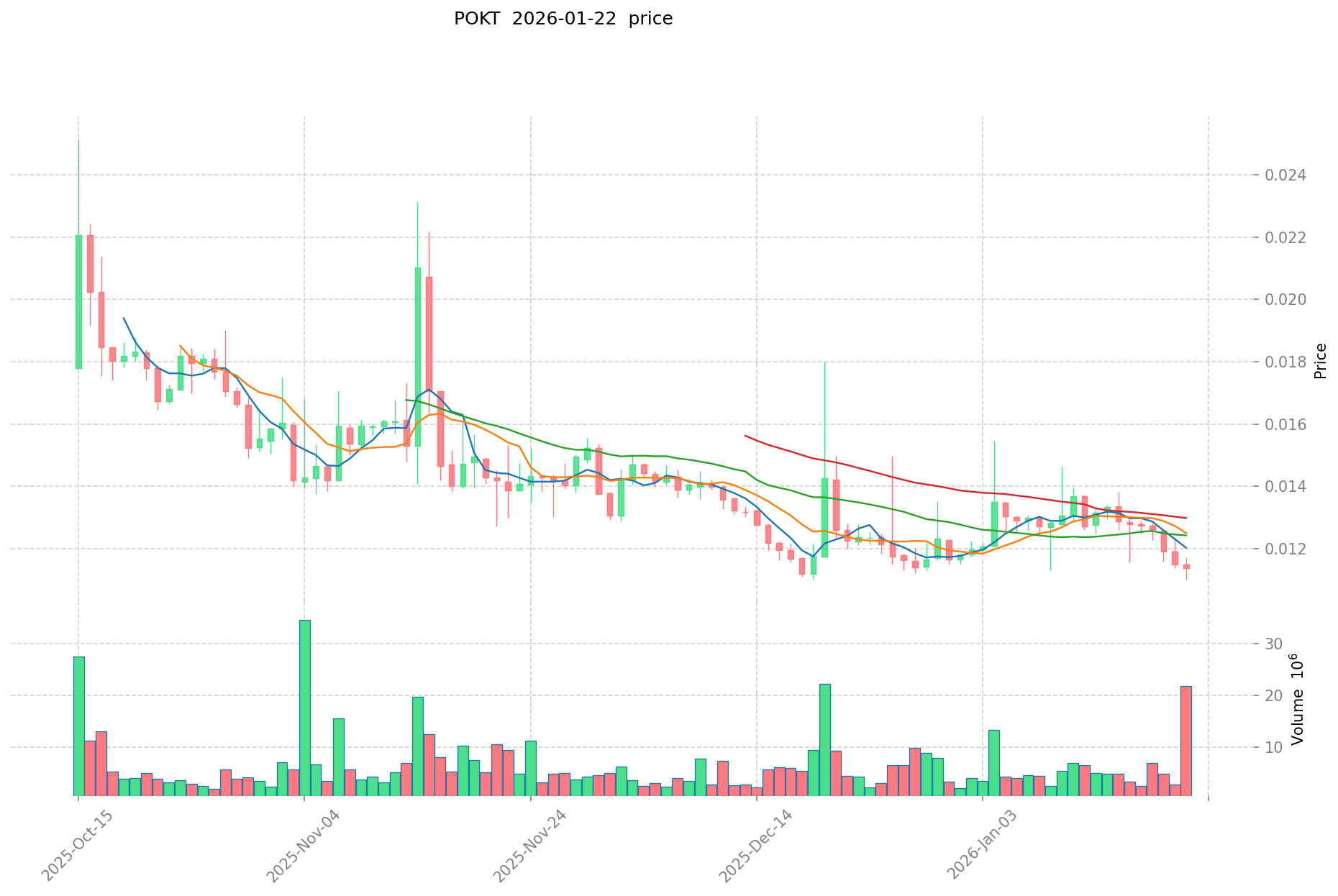
Pocket Network reached a notable price level of $3.11 on January 16, 2022, during a period characterized by broader market enthusiasm and increased adoption of Web3 infrastructure solutions.
Its lowest recorded price was $0.00883573, occurring on April 17, 2025, reflecting market-wide volatility and shifting sentiment in the decentralized infrastructure sector.
These price movements reflect market sentiment, adoption trends, and external factors affecting the Web3 infrastructure landscape.
Click to view the current POKT market price
On-Chain Metrics
- 24-Hour Trading Volume: $252,690.48 (indicating current market activity)
- Market Capitalization: $23,134,321.47 (representing the current valuation of circulating tokens)
- Circulating Supply Ratio: 85.55% (showing the proportion of tokens currently in circulation relative to total supply)
Pocket Network Ecosystem Applications and Partners
Core Use Cases
Pocket Network's ecosystem supports multiple applications:
- Infrastructure Services: Pocket Network provides decentralized RPC relay services for Web3 applications, offering blockchain API infrastructure.
- Multi-Chain Support: The protocol supports 21 blockchains including Ethereum, Solana, Avalanche, Harmony, and Fuse, enabling cross-chain data transmission and relay services.
Strategic Partnerships
Pocket Network has established collaborations with various blockchain protocols and Web3 applications, enhancing its technical capabilities and market presence. These partnerships provide a solid foundation for Pocket Network's ecosystem expansion.
Controversies and Challenges
Pocket Network faces the following challenges:
- Technical Hurdles: Maintaining service quality and reliability across a decentralized node network
- Regulatory Risks: Uncertainty in regulatory frameworks for decentralized infrastructure services
- Competitive Pressure: Competition from other blockchain infrastructure providers and centralized API services
These issues have sparked discussions within the community and market, driving Pocket Network's continuous innovation.
Pocket Network Community and Social Media Atmosphere
Community Engagement
Pocket Network's community demonstrates active participation, with the protocol validating relay data and proportionally rewarding participating nodes with POKT tokens.
On X platform, related posts and hashtags (such as #POKT) generate regular engagement.
Network upgrades and protocol developments continue to fuel community enthusiasm.
Social Media Sentiment
Sentiment on X presents diverse perspectives:
- Supporters praise Pocket Network's decentralized infrastructure model and node reward mechanism, viewing it as "essential Web3 infrastructure".
- Critics focus on price volatility and market conditions.
Recent trends reflect ongoing interest in decentralized infrastructure solutions.
Hot Topics
X users actively discuss Pocket Network's role in Web3 infrastructure, decentralization benefits, and network growth, showcasing both its transformative potential and the path toward broader adoption.
More Information Sources for Pocket Network
- Official Website: Visit Pocket Network Official Site for features, use cases, and latest updates.
- Documentation: Pocket Network Docs details its technical architecture, goals, and vision.
- X Updates: On X platform, Pocket Network uses @POKTnetwork, where posts cover technical upgrades, community activities, and partnership news, generating engagement from the community.
Pocket Network Future Roadmap
- Ongoing Development: Continuous protocol improvements to enhance network performance and reliability
- Ecosystem Goals: Expanding support for additional blockchain networks and increasing node participation
- Long-term Vision: Becoming the standard decentralized infrastructure layer for Web3 applications
How to Participate in Pocket Network?
- Purchase Options: Buy POKT on Gate.com and other exchanges
- Storage Solutions: Use compatible wallets for secure storage
- Node Operation: Run nodes to earn POKT rewards by providing relay services
- Ecosystem Building: Visit GitHub to contribute to development or deploy applications
Summary
Pocket Network redefines blockchain infrastructure through decentralized technology, providing transparent, secure, and efficient API relay services. Its active community, comprehensive documentation, and market presence make it distinctive in the cryptocurrency field. Despite facing regulatory uncertainties and competitive pressures, Pocket Network's innovative approach and clear roadmap position it as an important component in the future of decentralized technology. Whether you're a newcomer or experienced participant, Pocket Network deserves attention and engagement.
FAQ
What is POKT (Pocket Network)? What are its main functions?
Pocket Network is a decentralized infrastructure protocol providing RPC endpoints for blockchain applications. Its main function is enabling developers to access blockchain data through a distributed network of nodes, ensuring reliable and scalable Web3 connectivity without centralized dependencies.
What are the uses of POKT tokens and how to obtain them?
POKT tokens power the Pocket Network, enabling node operators to stake and earn rewards for providing RPC services. Users can obtain POKT through staking rewards, purchasing on markets, or participating in network activities and incentive programs.
What is the difference between Pocket Network and other RPC service providers like Infura and Alchemy?
Pocket Network is a decentralized RPC infrastructure powered by a network of independent node operators, unlike centralized providers. It offers lower costs, higher redundancy, and community-driven governance while maintaining comparable performance and reliability.
POKT作为投资品种,风险和收益潜力如何?
POKT具有较高增长潜力。作为Pocket Network的原生代币,支撑去中心化RPC基础设施,市场需求持续增长。长期看,随着Web3应用扩展,POKT价值有望上升。但需注意市场波动性风险,投资需谨慎评估。
How to become a Pocket Network Node Runner?
Install the Pocket node software, stake POKT tokens as collateral, configure your infrastructure to serve RPC requests, and register on the network. Earn POKT rewards for providing reliable relay services to applications and users.
What is the future development outlook and roadmap for POKT?
POKT is expanding infrastructure for decentralized RPC services and Web3 adoption. The roadmap focuses on network scalability, enhanced validator incentives, and integration with emerging blockchain ecosystems. Expected growth in demand for decentralized node infrastructure positions POKT for significant market expansion through 2026-2027.
Share
Content
Pocket Network's Positioning and Significance
Origin and Development History
How Does Pocket Network Operate?
Pocket Network's Market Performance
Pocket Network Ecosystem Applications and Partners
Controversies and Challenges
Pocket Network Community and Social Media Atmosphere
More Information Sources for Pocket Network
Pocket Network Future Roadmap
How to Participate in Pocket Network?
Summary
FAQ
How to Buy Cryptocurrency


Trending Cryptocurrencies



XZXX: A Comprehensive Guide to the BRC-20 Meme Token in 2025

What Is a Phantom Wallet: A Guide for Solana Users in 2025

Ethereum 2.0 in 2025: Staking, Scalability, and Environmental Impact

2025 Layer-2 Solution: Ethereum Scalability and Web3 Performance Optimization Guide
What is BOOP: Understanding the Web3 Token in 2025
Altcoin Season Index 2025: How to Use and Invest in Web3
Ethereum Price Prediction: Institutional Investment Signals Potential Uptrend
What is YB: A Comprehensive Guide to Understanding Young Blood Technology and Its Applications in Modern Medicine

What is BNKR: A Comprehensive Guide to the Blockchain-Based Banking Revolution

Best New Meme Coin to Buy – Market Analysis

What is ACT: A Comprehensive Guide to the American College Test and Its Impact on College Admissions