MBL vs TRX: A Comprehensive Comparison of Two Leading Suspension Training Systems


Introduction: MBL vs TRX Investment Comparison
In the cryptocurrency market, the comparison between MBL vs TRX remains a topic investors cannot avoid. Both show significant differences in market cap ranking, application scenarios, and price performance, representing distinct crypto asset positioning.
MBL (MovieBloc): Launched in 2019, it has gained market recognition through its blockchain-based film distribution platform positioning, providing creators with transparent revenue distribution and fair screening opportunities.
TRX (TRON): Since its 2017 launch, it has been known as a large-scale public blockchain infrastructure, becoming one of the cryptocurrencies with significant trading volume globally, particularly after entering the decentralized stablecoin era in 2022.
This article will comprehensively analyze the investment value comparison of MBL vs TRX around historical price trends, supply mechanisms, institutional adoption, technical ecosystems, and future forecasts, attempting to answer investors' most pressing question:
"Which is the better buy right now?"
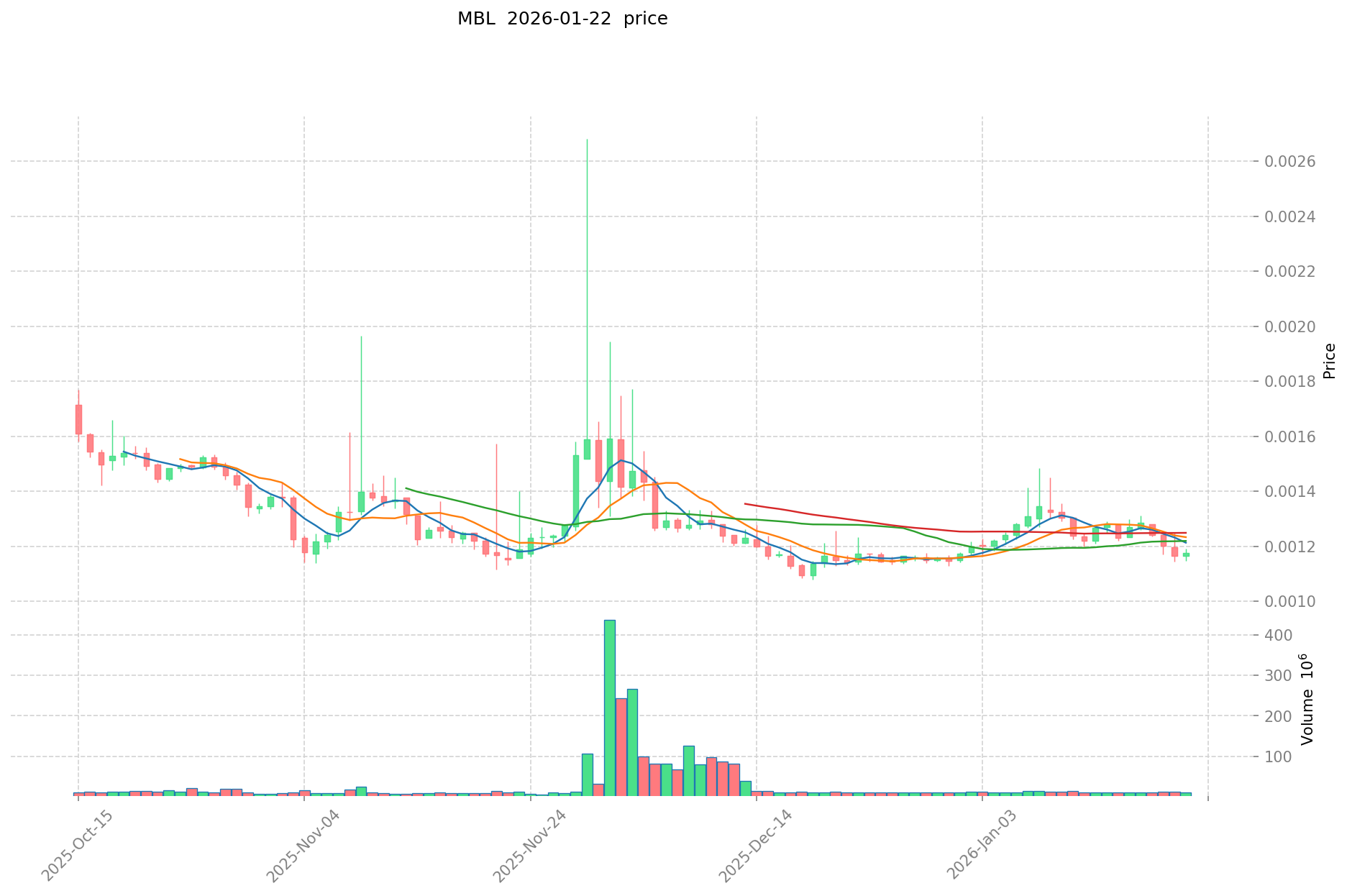
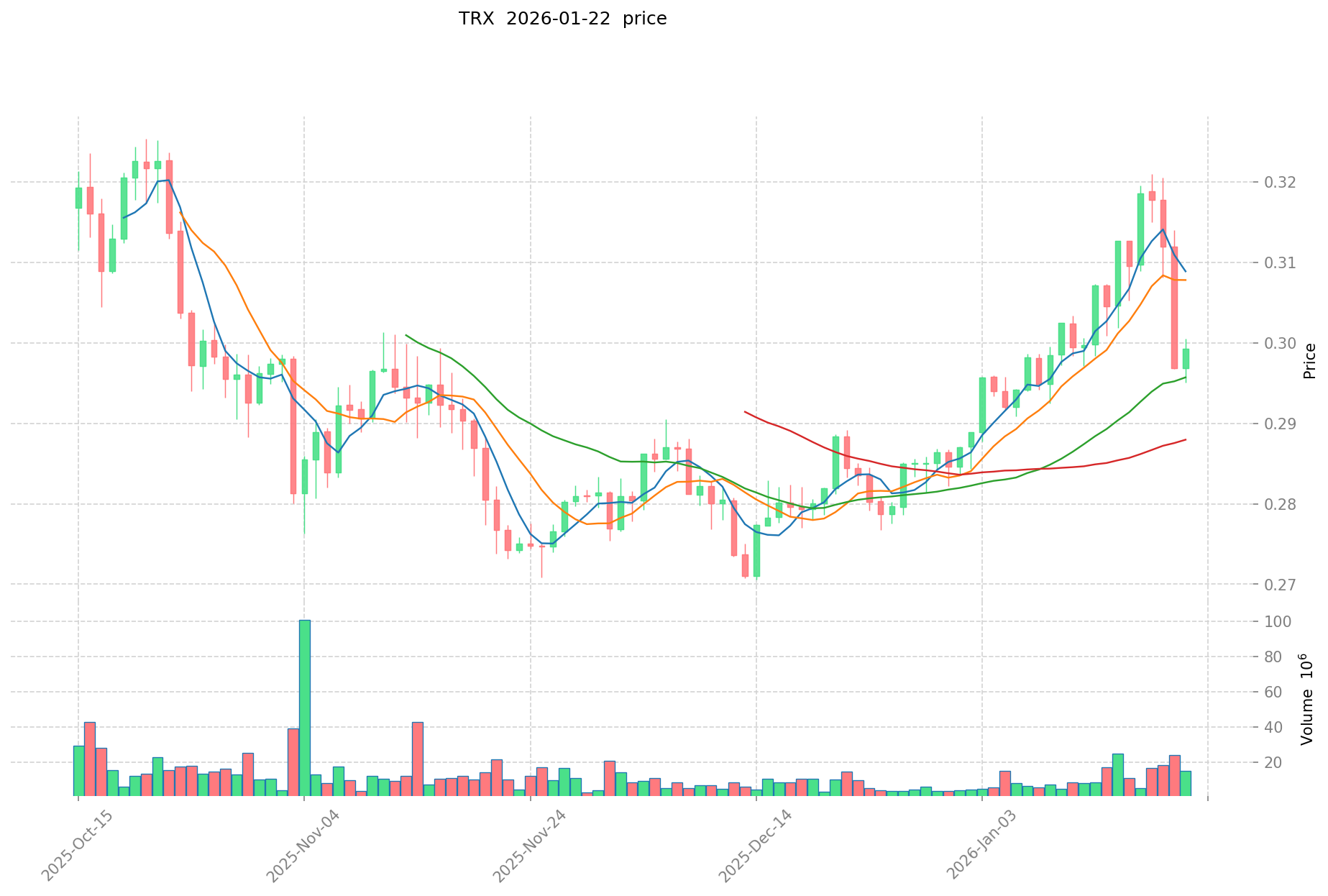
I. Historical Price Comparison and Current Market Status
Historical Price Trends of MBL (Coin A) and TRX (Coin B)
- 2021: MBL reached its all-time high of $0.0450322 on April 2, 2021, during the broader crypto market rally.
- 2019: MBL recorded its all-time low of $0.00042973 on October 25, 2019, reflecting early-stage market valuation challenges.
- 2024: TRX achieved its all-time high of $0.431288 on December 4, 2024, marking significant growth momentum.
- 2017: TRX hit its all-time low of $0.00180434 on November 12, 2017, shortly after its initial launch.
- Comparative Analysis: During various market cycles, MBL experienced substantial volatility, declining from its peak of $0.0450322 to current levels around $0.00116, representing approximately a 97% decrease from its all-time high. In contrast, TRX demonstrated relative resilience, with its current price of $0.30054 representing about a 30% decline from its all-time high, indicating stronger market position retention.
Current Market Status (2026-01-23)
- MBL Current Price: $0.00116
- TRX Current Price: $0.30054
- 24-Hour Trading Volume: MBL recorded $12,455.35 vs TRX's $5,310,788.06, highlighting significantly different liquidity levels
- Market Sentiment Index (Fear & Greed Index): 20 (Extreme Fear)
View real-time prices:
- Check MBL current price Market Price
- Check TRX current price Market Price
II. Core Factors Affecting the Investment Value of MBL vs TRX
Supply Mechanism Comparison (Tokenomics)
Due to limited available data on the specific supply mechanisms of MBL and TRX, a detailed comparative analysis cannot be provided at this time. Generally, supply mechanisms such as fixed supply models, deflationary structures, or halving events can influence long-term price dynamics by affecting scarcity and market expectations.
Institutional Adoption and Market Applications
Insufficient information is available regarding institutional holdings, enterprise adoption in cross-border payments or settlement systems, and regulatory attitudes toward MBL and TRX across different jurisdictions. These factors typically play a significant role in shaping market demand and legitimacy.
Technical Development and Ecosystem Building
Without specific details on recent technical upgrades or ecosystem developments for MBL and TRX, including their involvement in DeFi, NFT platforms, payment solutions, or smart contract implementations, a comparative assessment cannot be conducted.
Macroeconomic Environment and Market Cycles
The performance of digital assets during inflationary periods, their sensitivity to monetary policy changes such as interest rate adjustments and US dollar index fluctuations, as well as geopolitical factors affecting cross-border transaction demand, are important considerations. However, specific comparative data for MBL and TRX under these conditions is not available in the provided materials.
III. 2026-2031 Price Forecast: MBL vs TRX
Short-term Forecast (2026)
- MBL: Conservative $0.0006844 - $0.00116 | Optimistic $0.00116 - $0.0014616
- TRX: Conservative $0.2737735 - $0.30085 | Optimistic $0.30085 - $0.379071
Medium-term Forecast (2028-2029)
- MBL may enter a gradual growth phase, with estimated prices ranging from $0.00078883944 to $0.00222731136 in 2028, and $0.0009623841168 to $0.0024153954304 in 2029
- TRX may experience moderate expansion, with projected prices between $0.3111318496 and $0.5268027908 in 2028, and $0.26410851324 to $0.48419894094 in 2029
- Key drivers: institutional capital flows, ETF developments, ecosystem expansion
Long-term Forecast (2031)
- MBL: Baseline scenario $0.002483035937589 - $0.002613722039568 | Optimistic scenario $0.002613722039568 - $0.003633073634999
- TRX: Baseline scenario $0.264557497712508 - $0.4899212920602 | Optimistic scenario $0.4899212920602 - $0.725083512249096
Disclaimer: Price predictions are based on historical data analysis and market modeling. Cryptocurrency markets are highly volatile and subject to numerous unpredictable factors. These forecasts should not be considered as investment advice, and actual prices may differ significantly from projections.
MBL:
| Year | Predicted High Price | Predicted Average Price | Predicted Low Price | Price Change |
|---|---|---|---|---|
| 2026 | 0.0014616 | 0.00116 | 0.0006844 | 0 |
| 2027 | 0.001782688 | 0.0013108 | 0.000956884 | 13 |
| 2028 | 0.00222731136 | 0.001546744 | 0.00078883944 | 33 |
| 2029 | 0.0024153954304 | 0.00188702768 | 0.0009623841168 | 62 |
| 2030 | 0.003076232523936 | 0.0021512115552 | 0.001914578284128 | 85 |
| 2031 | 0.003633073634999 | 0.002613722039568 | 0.002483035937589 | 125 |
TRX:
| Year | Predicted High Price | Predicted Average Price | Predicted Low Price | Price Change |
|---|---|---|---|---|
| 2026 | 0.379071 | 0.30085 | 0.2737735 | 0 |
| 2027 | 0.36715734 | 0.3399605 | 0.19037788 | 13 |
| 2028 | 0.5268027908 | 0.35355892 | 0.3111318496 | 17 |
| 2029 | 0.48419894094 | 0.4401808554 | 0.26410851324 | 46 |
| 2030 | 0.5176526859504 | 0.46218989817 | 0.4205928073347 | 53 |
| 2031 | 0.725083512249096 | 0.4899212920602 | 0.264557497712508 | 62 |
IV. Investment Strategy Comparison: MBL vs TRX
Long-term vs Short-term Investment Strategies
- MBL: May suit investors focused on niche content distribution platforms and early-stage blockchain entertainment applications, with higher risk tolerance for significant price volatility
- TRX: May appeal to investors seeking exposure to established blockchain infrastructure with broader ecosystem applications and relatively higher liquidity
Risk Management and Asset Allocation
- Conservative investors: MBL 10-15% vs TRX 20-30% (within crypto portfolio allocation)
- Aggressive investors: MBL 20-30% vs TRX 30-40% (within crypto portfolio allocation)
- Hedging tools: stablecoin allocation, options strategies, cross-currency portfolio diversification
V. Potential Risk Comparison
Market Risks
- MBL: Faces significant liquidity challenges with 24-hour trading volume of $12,455.35, indicating higher susceptibility to price manipulation and difficulty executing large trades without substantial price impact
- TRX: Despite higher liquidity with $5,310,788.06 in 24-hour volume, remains exposed to broader cryptocurrency market sentiment fluctuations and correlation with major digital assets
Technical Risks
- MBL: Limited information available regarding network scalability improvements, transaction throughput capacity, and ongoing technical development initiatives
- TRX: Considerations around network centralization concerns, smart contract security vulnerabilities, and dependency on ecosystem participant activity levels
Regulatory Risks
- Global regulatory frameworks continue evolving, with potential differential impact on content-focused platforms like MBL versus infrastructure-layer protocols like TRX. Jurisdictional approaches to digital asset classification, securities law application, and cross-border transaction monitoring may affect both assets differently based on their operational models and use cases.
VI. Conclusion: Which Is the Better Buy?
📌 Investment Value Summary:
- MBL advantages: Early positioning in blockchain-based content distribution sector, potential for growth if entertainment industry adoption accelerates, lower entry price point
- TRX advantages: Established blockchain infrastructure with demonstrated ecosystem activity, significantly higher liquidity facilitating easier position management, relatively smaller distance from all-time high suggesting stronger price retention
✅ Investment Recommendations:
- Novice investors: Consider prioritizing assets with higher liquidity and established track records. TRX may present lower execution risk due to trading volume, though both assets carry substantial volatility
- Experienced investors: May evaluate MBL for speculative allocation within diversified portfolios, while using TRX for core blockchain infrastructure exposure. Position sizing should reflect individual risk tolerance and investment timeframes
- Institutional investors: Conduct comprehensive due diligence on regulatory compliance, custody solutions, liquidity depth, and alignment with investment mandates before allocation decisions
⚠️ Risk Warning: Cryptocurrency markets exhibit extreme volatility. This analysis does not constitute investment advice. Historical performance does not guarantee future results. Investors should conduct independent research and consult qualified financial advisors before making investment decisions.
VII. FAQ
Q1: What are the main differences in liquidity between MBL and TRX?
TRX demonstrates significantly higher liquidity with a 24-hour trading volume of $5,310,788.06 compared to MBL's $12,455.35, representing approximately 426 times greater trading activity. This substantial liquidity gap means TRX investors can execute larger trades with minimal price impact and easier entry/exit strategies, while MBL holders face heightened risks of price manipulation, wider bid-ask spreads, and difficulty executing substantial position changes without materially affecting market prices. For practical trading purposes, TRX's liquidity advantage makes it more suitable for institutional allocations and active trading strategies, whereas MBL's limited volume suggests it's better suited for long-term holders willing to accept higher execution risks.
Q2: How do the historical price performances of MBL and TRX compare?
MBL has experienced more severe price deterioration, declining approximately 97% from its April 2021 all-time high of $0.0450322 to its current price of $0.00116. In contrast, TRX has demonstrated relatively stronger price retention, declining about 30% from its December 2024 all-time high of $0.431288 to its current price of $0.30054. This disparity indicates TRX has maintained better market position and investor confidence throughout market cycles, while MBL has faced significant challenges in sustaining valuation. The performance gap suggests different risk-reward profiles, with MBL presenting higher risk but potentially greater percentage upside from current depressed levels, while TRX offers more stability with established market presence.
Q3: What are the projected price ranges for MBL and TRX by 2031?
According to forecasting models, MBL is projected to reach between $0.002483 and $0.003633 by 2031 under baseline to optimistic scenarios, representing potential increases of approximately 114% to 213% from current levels of $0.00116. TRX is forecasted to range between $0.2646 and $0.7251 by 2031, indicating possible growth of -12% to 141% from its current price of $0.30054. While MBL shows higher percentage growth potential due to its lower base, the absolute dollar growth and reliability of TRX projections may be higher given its established market position. However, these forecasts carry substantial uncertainty and should not be interpreted as guaranteed outcomes, as cryptocurrency markets are subject to numerous unpredictable factors.
Q4: Which asset is more suitable for conservative versus aggressive investors?
For conservative investors within cryptocurrency portfolios, TRX presents a relatively lower-risk option due to superior liquidity, established infrastructure positioning, and better historical price stability, suggesting allocation ranges of 20-30% within the crypto portion of a diversified portfolio. MBL may warrant only 10-15% allocation for conservative crypto investors due to extreme volatility and liquidity constraints. Aggressive investors willing to accept higher risk for potential outsized returns might consider 30-40% TRX allocation and 20-30% MBL allocation within their cryptocurrency holdings. However, both assets remain highly speculative, and even aggressive allocations should be sized appropriately within broader investment portfolios that include traditional assets.
Q5: What are the primary risk factors specific to MBL compared to TRX?
MBL faces three critical risk categories that distinguish it from TRX: First, severe liquidity risk with daily volumes under $13,000 makes it vulnerable to price manipulation and difficult to exit during adverse conditions. Second, niche market exposure limited to blockchain-based content distribution creates dependency on entertainment industry adoption rates, which remain uncertain. Third, limited available information regarding technical development, institutional backing, and regulatory positioning suggests lower transparency and potentially higher operational risks. Conversely, while TRX faces its own challenges including network centralization concerns and regulatory uncertainties, its established ecosystem, significantly higher liquidity, and broader use case portfolio provide greater operational resilience and risk diversification.
Q6: How should investors approach portfolio allocation between MBL and TRX?
Investors should approach MBL and TRX allocation through a tiered strategy based on risk tolerance and investment objectives. For balanced cryptocurrency exposure, consider a 2:1 or 3:1 ratio favoring TRX over MBL, given TRX's superior liquidity and established market position. A sample allocation within a cryptocurrency portfolio might include 25-30% TRX for core blockchain infrastructure exposure and 10-15% MBL for speculative upside potential. This approach limits downside exposure to MBL's higher volatility while maintaining meaningful participation in potential growth. Additionally, implement strict risk management protocols including stop-loss orders for MBL positions, regular portfolio rebalancing, and maintaining adequate stablecoin reserves for opportunistic buying during market downturns. Never allocate more than 5-10% of total investment capital to combined cryptocurrency holdings.
Q7: What market conditions would favor MBL versus TRX performance?
MBL would likely outperform during specific market scenarios including: blockchain entertainment sector momentum driven by NFT integration or streaming platform adoption, small-cap altcoin rallies where lower market capitalization assets experience disproportionate gains, and successful implementation of MovieBloc platform features that drive user adoption and token utility. Conversely, TRX typically benefits from: institutional cryptocurrency adoption waves favoring established infrastructure protocols, stablecoin ecosystem expansion given TRON's significant role in USDT circulation, mainstream DeFi growth requiring scalable blockchain platforms, and regulatory clarity that favors compliant, established networks. Understanding these divergent catalysts helps investors time positions appropriately, though predicting exact market condition timing remains exceptionally challenging.
Q8: What due diligence steps should investors complete before choosing between MBL and TRX?
Before investment decisions, conduct comprehensive due diligence including: First, verify current development activity through GitHub repositories, team communications, and roadmap execution progress for both projects. Second, assess actual ecosystem usage metrics beyond price, including daily active addresses, transaction volumes, and DApp activity. Third, evaluate regulatory positioning by reviewing compliance frameworks, legal entity structures, and jurisdictional risks. Fourth, analyze token distribution and unlock schedules to understand potential supply pressures. Fifth, research team credentials, advisory boards, and institutional partnerships. Sixth, review community sentiment through social media monitoring and developer engagement levels. Finally, consult with qualified financial advisors regarding portfolio suitability, tax implications, and custody solutions before executing trades.
Share
Content
Introduction: MBL vs TRX Investment Comparison
I. Historical Price Comparison and Current Market Status
II. Core Factors Affecting the Investment Value of MBL vs TRX
III. 2026-2031 Price Forecast: MBL vs TRX
IV. Investment Strategy Comparison: MBL vs TRX
V. Potential Risk Comparison
VI. Conclusion: Which Is the Better Buy?
VII. FAQ
How to Buy Cryptocurrency


Trending Cryptocurrencies



2025 SUI coin: price, buying guide, and Staking rewards

How to Buy Crypto: A Step-by-Step Guide with Gate.com

HNT Price in 2025: Helium Network Token Value and Market Analysis
What is SwissCheese (SWCH) and How Does It Democratize Investment?

Cardano (ADA) Price Analysis and Outlook for 2025

How to Invest in Metaverse Crypto

Bitcoin Price Prediction: JPMorgan Predicts $170K BTC Within 6 Months – Is Wall Street Buying the Dip?
Why Is Crypto Down Recently? Market Analysis and Key Insights

What is CETUS: A Revolutionary Blockchain Platform for Decentralized Finance and Smart Contract Innovation

What is SONIC: A Comprehensive Guide to the Revolutionary Hedgehog Franchise and Its Impact on Gaming Culture

What is PRO: A Comprehensive Guide to Professional Recognition and Opportunities