

Trade
Basic
Futures
Futures
Hundreds of contracts settled in USDT or BTC
Options
HOT
Trade European-style vanilla options
Unified Account
Maximize your capital efficiency
Demo Trading
Futures Kickoff
Get prepared for your futures trading
Futures Events
Participate in events to win generous rewards
Demo Trading
Use virtual funds to experience risk-free trading
Earn
Launch
CandyDrop
Collect candies to earn airdrops
Launchpool
Quick staking, earn potential new tokens
HODLer Airdrop
Hold GT and get massive airdrops for free
Launchpad
Be early to the next big token project
Alpha Points
NEW
Trade on-chain assets and enjoy airdrop rewards!
Futures Points
NEW
Earn futures points and claim airdrop rewards
Investment
Simple Earn
Earn interests with idle tokens
Auto-Invest
Auto-invest on a regular basis
Dual Investment
Buy low and sell high to take profits from price fluctuations
Soft Staking
Earn rewards with flexible staking
Crypto Loan
0 Fees
Pledge one crypto to borrow another
Lending Center
One-stop lending hub
VIP Wealth Hub
Customized wealth management empowers your assets growth
Private Wealth Management
Customized asset management to grow your digital assets
Quant Fund
Top asset management team helps you profit without hassle
Staking
Stake cryptos to earn in PoS products
Smart Leverage
NEW
No forced liquidation before maturity, worry-free leveraged gains
GUSD Minting
Use USDT/USDC to mint GUSD for treasury-level yields

More


Trending Topics
View More21.13K Popularity
3.61K Popularity
341 Popularity
1.31K Popularity
1.07K Popularity




Pin
By 2030, AI will surpass human groups: Musk's four-year countdown at Davos
According to the latest news, on January 23rd, Elon Musk delivered a speech at the World Economic Forum in Davos, Switzerland, outlining a clear timeline for the development of artificial intelligence. This is not a vague long-term vision but a prediction with specific years—from the end of this year to 2030, AI will undergo a series of key capability leaps, ultimately surpassing the intelligence level of the entire human population. This timeline is detailed enough and bold enough.
Specific Timeline for AI Development
According to Musk’s statements, the enhancement of AI capabilities is divided into three key milestones:
The logic of this timeline is very clear: first surpass individuals, then surpass the collective. It only takes four years from a single person to the entire group.
What Does This Mean
Reshaping the Career Ecosystem
Previously, Musk warned that everyone should be prepared to be replaced within five years. According to relevant information, he explicitly stated that AI can now perform over 50% of legal, accounting, and market analysis work. This is not alarmism—if AI surpasses the collective human intelligence by 2030, most jobs that require “thinking” could face restructuring.
From blue-collar to white-collar, from physical labor to mental work, all are within this scope of replacement. Optimus robots can build walls, weld, and harvest 24/7, while AI is already handling complex professional tasks.
A New Definition of Human Competitiveness
Interestingly, Musk emphasized a point often overlooked in his concurrent views: a healthy body will become “the only dividend of the era.” In his view, in the next decade, we will conquer all diseases, but only if you have a healthy body to face this future.
This hints at a new reality—when AI fully surpasses humans in intelligence, human competitiveness may no longer come from thinking ability but from physical health, creative thinking, emotional connections, and other qualities that are harder to replicate.
Parallel Progress of SpaceX
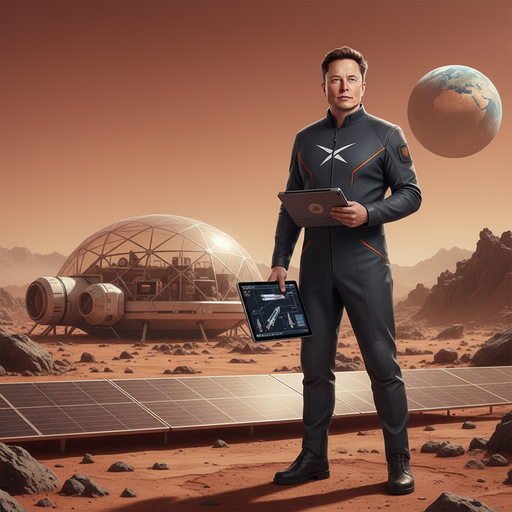
In the same speech, Musk also mentioned SpaceX’s progress. This year, fully reusable rockets are expected to be realized, meaning that future space access will only require paying for fuel. This may seem like another topic, but in fact, it echoes the same theme: technological progress is reshaping the boundaries of human capability at an exponential rate.
Issues to Watch
Prediction or Reality
It’s important to clarify that these are Musk’s predictions, not yet established facts. Historically, his predictions have sometimes been overly optimistic—for example, the timeline for full autonomous driving has often been delayed. But even with some discounting, the speed of AI development in the coming years is clearly accelerating.
Governance Vacuum
If AI truly surpasses human collective intelligence around 2030, discussions on AI governance, safety, and ethics will become especially urgent. Every decision made now could influence our situation at that moment.
Summary
The timeline Musk provided at Davos is very specific: AI will surpass individual humans by the end of 2026 and surpass the entire human group around 2030. This is not distant science fiction but a possible occurrence within four years.
The three core points are: first, there are clear time expectations for AI capability growth; second, the human occupational ecosystem will undergo profound restructuring, affecting not only blue-collar but also white-collar jobs; third, in this transition, attributes like health, creativity, and emotional intelligence—“non-computational” qualities—may become new sources of competitiveness.
Whether this prediction is accurate or not, what it reminds us is that the speed of technological change is accelerating, and our preparations now may determine our situation four years from now.