Gate Vault: Redefining Web3 Asset Security Beyond Private Keys
The True Barrier in the On-Chain World Is the Experience of Irreversible Risk
In Web3 discussions, barriers are often attributed to technical complexity, difficult wallet operations, or limited understanding of decentralization. Yet for most users, the real reason for hesitation is not how to use the technology, but the clear knowledge that if something goes wrong, there is almost no way to recover.
On-chain, mistakes are rarely fixed by simply trying again. Accidental authorization, clicking phishing links, or losing a private key—any single error can result in permanent asset loss. This highly irreversible nature transforms cybersecurity from a technical concern into a persistent psychological burden, and stands as the most significant obstacle to Web3 adoption.
Gate Vault was created with this in mind: If human error is inevitable, shouldn’t security systems allow room for mistakes?
Multi-Party Custody Security Architecture
Traditional on-chain wallets concentrate all permissions in a single private key. If that key is lost or exposed, asset control can be instantly compromised, with no way to correct the situation.
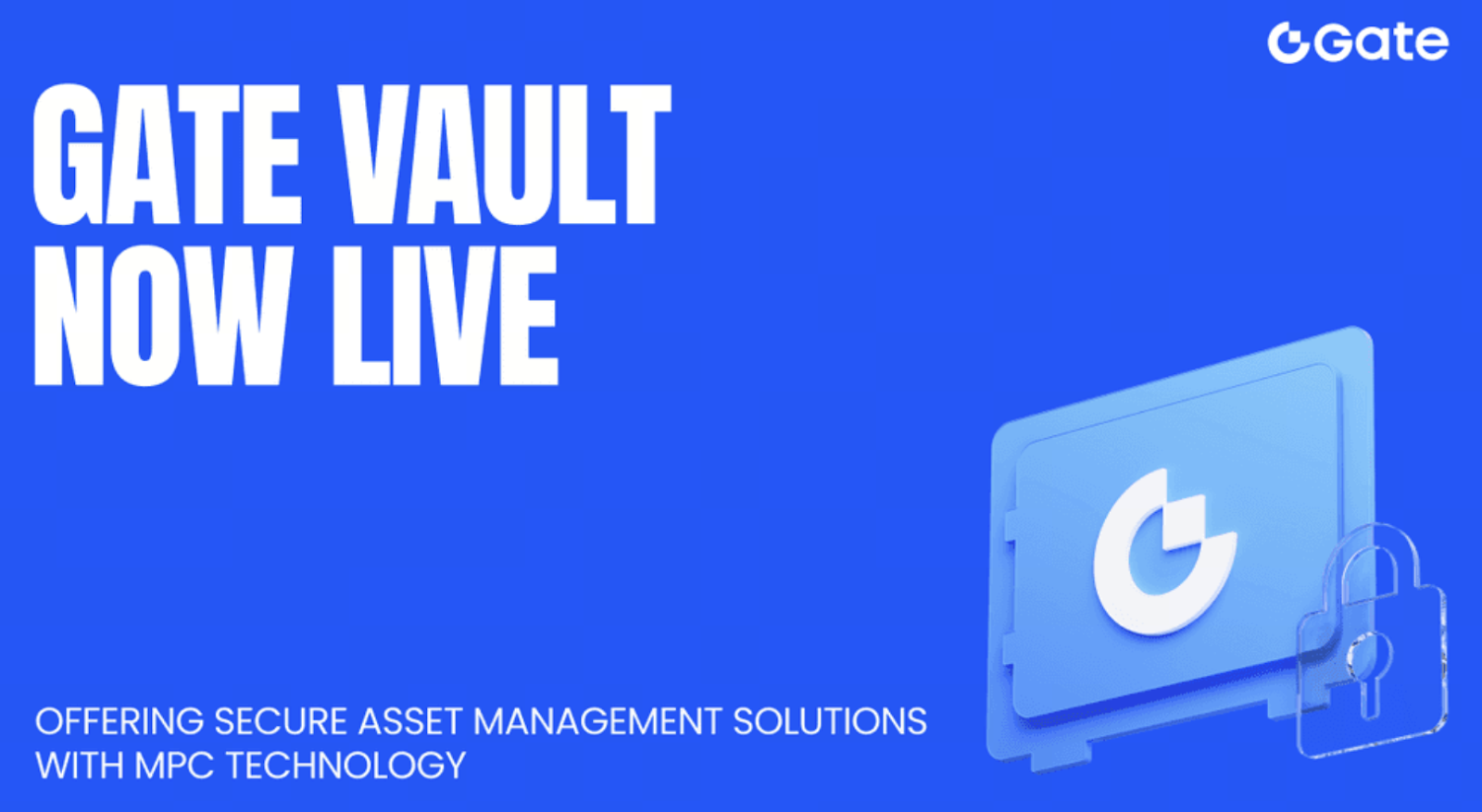
Gate Vault uses MPC (Multi-Party Computation) architecture, splitting the private key into three independent shards held separately by the user, Gate platform, and a third-party security provider. This decentralized structure means asset control no longer relies on a single point, but on coordinated multi-party collaboration. Risk shifts from a single error causing total loss to a distributed problem that can be intercepted and managed.
2-of-3 Signing Mechanism
With Gate Vault, every asset transaction requires authorization from at least two of the three parties before it can be signed. This is more than just a security setting—it fundamentally redefines how asset sovereignty operates in practice.
The user retains critical decision-making power but does not bear all risk alone. The platform cannot access assets without the user’s consent. The third-party security provider only verifies roles and cannot act beyond its scope. Asset sovereignty moves from the abstract idea of private key ownership to being embedded in every transaction process.
Providing Intervention Time for Mistakes Instead of Bearing Consequences Afterward
The destructive impact of most on-chain security incidents comes from the speed of transaction completion. Once an operation is recorded on-chain, errors become permanent. Gate Vault introduces a 48-hour security buffer period. When abnormal activity is detected, the transaction does not immediately become irreversible. Users can cancel authorization, freeze assets, or halt suspicious activity during this window. Security shifts from post-incident accountability to real-time intervention, turning single-point failures into manageable risks.
Assets Remain Recoverable Even in Extreme Situations
Even in cases of device loss, account anomalies, or system failures, Gate Vault provides a disaster recovery mechanism. Following official procedures, users can use third-party tools to recombine key shards and regain asset control. This ensures that asset sovereignty is not permanently interrupted by a single incident, offering long-term holders and high-asset users risk management standards aligned with mature financial systems.
Gate Vault: The Foundational Security Layer of the Gate Web3 Ecosystem
Gate Vault is not a standalone feature—it is the core security layer of the Gate Web3 ecosystem. Services such as Gate Layer, Gate Perp DEX, Gate Fun, Meme Go, and Gate PWM are all built on the same security framework. This consistency across products allows users to manage assets in different scenarios without adapting to varied risk control rules, resulting in a seamless and stable asset management experience.
Key Usage Requirements and Fee Summary
- Transferring assets from Gate Vault to a Gate account incurs a 0.1% maintenance fee (maximum $100)
- VIP 3 and above users may use Gate Vault free of charge
- General user plans will launch in future phases
- Gate App must be updated to version V7.23.6 or later
Official recommendation: Complete protective settings in advance—before market volatility or security incidents—to reduce unexpected risks.
Gate Vault User Guide: https://www.gate.com/help/guide/functional_guidelines/47328/gate-vault-user-guide
Summary
Gate Vault’s value is not in adding more complex security steps, but in redesigning risk management. Through decentralized architecture, multi-party signing, security buffering, and disaster recovery, it transforms the irreversible risks of Web3 into a security system that can be intercepted, corrected, and sustained. For users seeking both asset sovereignty and peace of mind in Web3, Gate Vault offers not stricter operational demands, but a more mature and practical path to asset safety.
Share
Content
The True Barrier in the On-Chain World Is the Experience of Irreversible Risk
Multi-Party Custody Security Architecture
2-of-3 Signing Mechanism
Providing Intervention Time for Mistakes Instead of Bearing Consequences Afterward
Assets Remain Recoverable Even in Extreme Situations
Gate Vault: The Foundational Security Layer of the Gate Web3 Ecosystem
Key Usage Requirements and Fee Summary
Summary


Related Articles

Crypto Future Profit Calculator: How to Calculate Your Potential Gains

Crypto Futures Calculator: Easily Estimate Your Profits & Risks

What is Oasis Network (ROSE)?
The $50M Crypto Scam Nobody Is Talking About

What Are Crypto Options?